
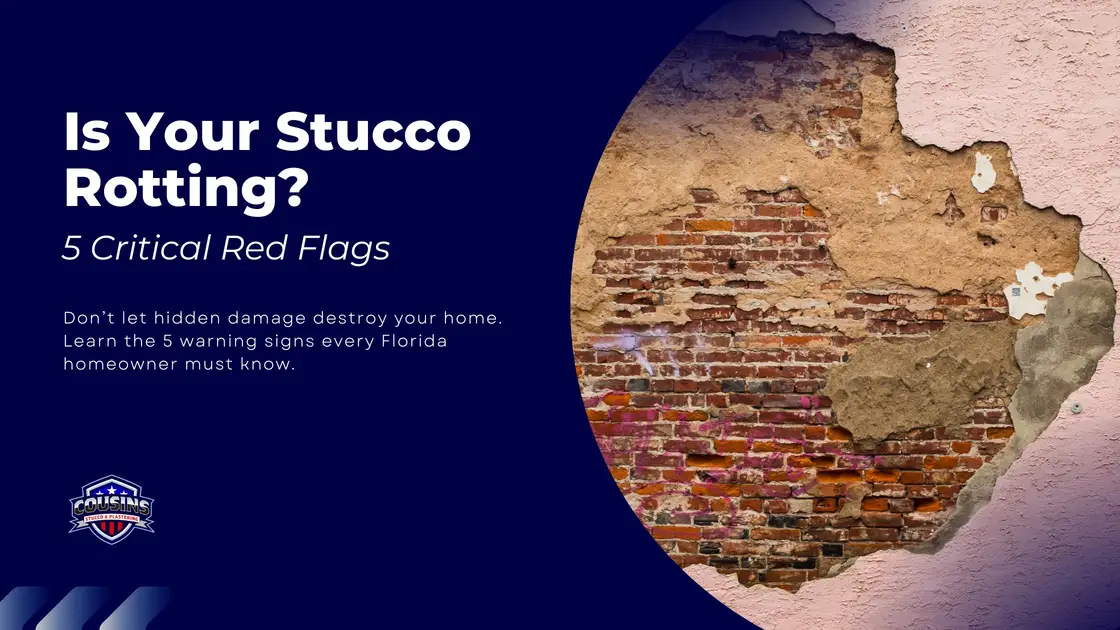
In Florida, your stucco doesn’t just sit there—it fights. It fights 100-degree heat, sideways tropical rain, and 90% humidity. Most homeowners don’t think about their stucco until they see a crack, but by then, the “slow rot” may have already cost you thousands.
Early detection is the difference between a $500 patch and a $50,000 remediation. Here is how to spot the trouble before it spreads.
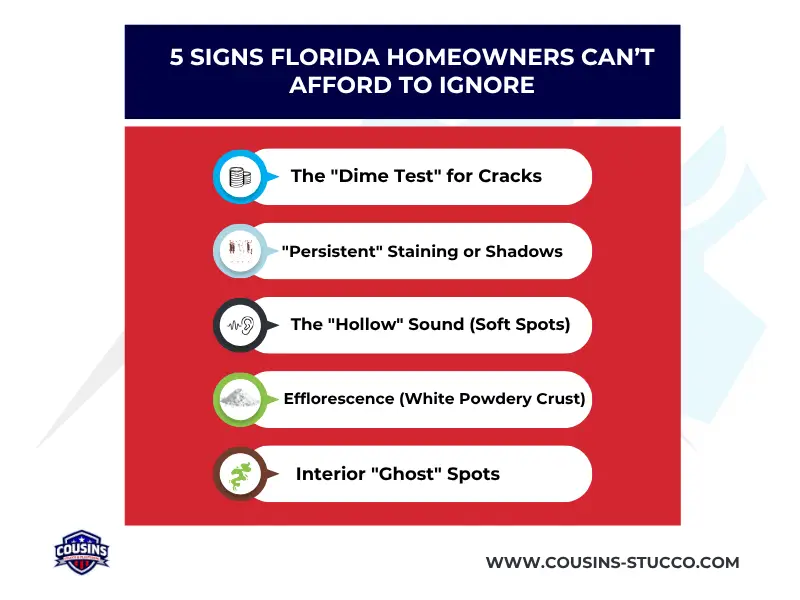
1. The “Dime Test” for Cracks
Not every crack is a crisis, but you need to know the difference:
- Hairline Cracks: Usually caused by the house “settling.” These are cosmetic but should be sealed with elastomeric paint to prevent them from growing.
- The Dime Test: If a crack is wide enough to fit a dime into, it is no longer cosmetic. It is now a funnel for rainwater to pour directly into your wall cavity.
2. “Persistent” Staining or Shadows
Florida humidity naturally causes some algae, but there’s a red flag to watch for: If you pressure wash a dark spot and it returns in the exact same shape within weeks, the moisture isn’t on the outside—it’s leaking from the inside. This often indicates a failed window seal or roof leak.
3. The “Hollow” Sound (Soft Spots)
Take a walk around your home and gently knock on the stucco, especially near the base of the walls and around windows.
- Solid: Should sound like knocking on concrete.
- The Danger Sign: A “hollow” or “thud” sound, or any area that feels slightly spongy. This means the stucco has delaminated (detached) from the house, usually because the wood or mesh behind it is rotting.
4. Efflorescence (White Powdery Crust)
If you see a white, chalky substance appearing on your walls, that’s not just dirt. It’s efflorescence. This happens when water gets trapped inside the stucco and, as it evaporates, it pushes salt and minerals to the surface. It is a “smoking gun” for trapped moisture.
5. Interior “Ghost” Spots
Sometimes the best stucco inspection happens inside the house. Check the interior walls that face the outdoors for:
- Peeling baseboards: A classic sign of water wicking up from the stucco.
- Musty Smells: If a room smells like a basement, moisture is likely trapped in the wall studs.
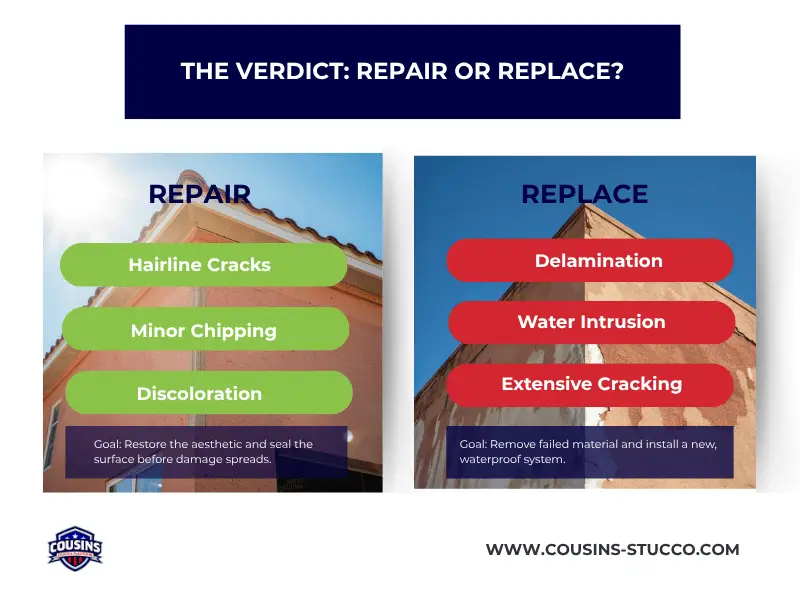
The Verdict: Repair or Replace?
- Patch & Seal: Best for hairline cracks and minor cosmetic staining.
- Sectional Repair: Necessary if you have localized “bulging” or soft spots around a single window.
- Full Remediation: Required if the moisture barrier behind the stucco has failed, leading to widespread rot.
Don’t Let a Small Crack Become a Big Bill
In Florida’s climate, stucco issues never “stay the same”—they only get more expensive. If you’ve noticed any of these signs, a professional moisture probe test or inspection can give you the peace of mind you need before hurricane season.
Notice something suspicious on your walls?