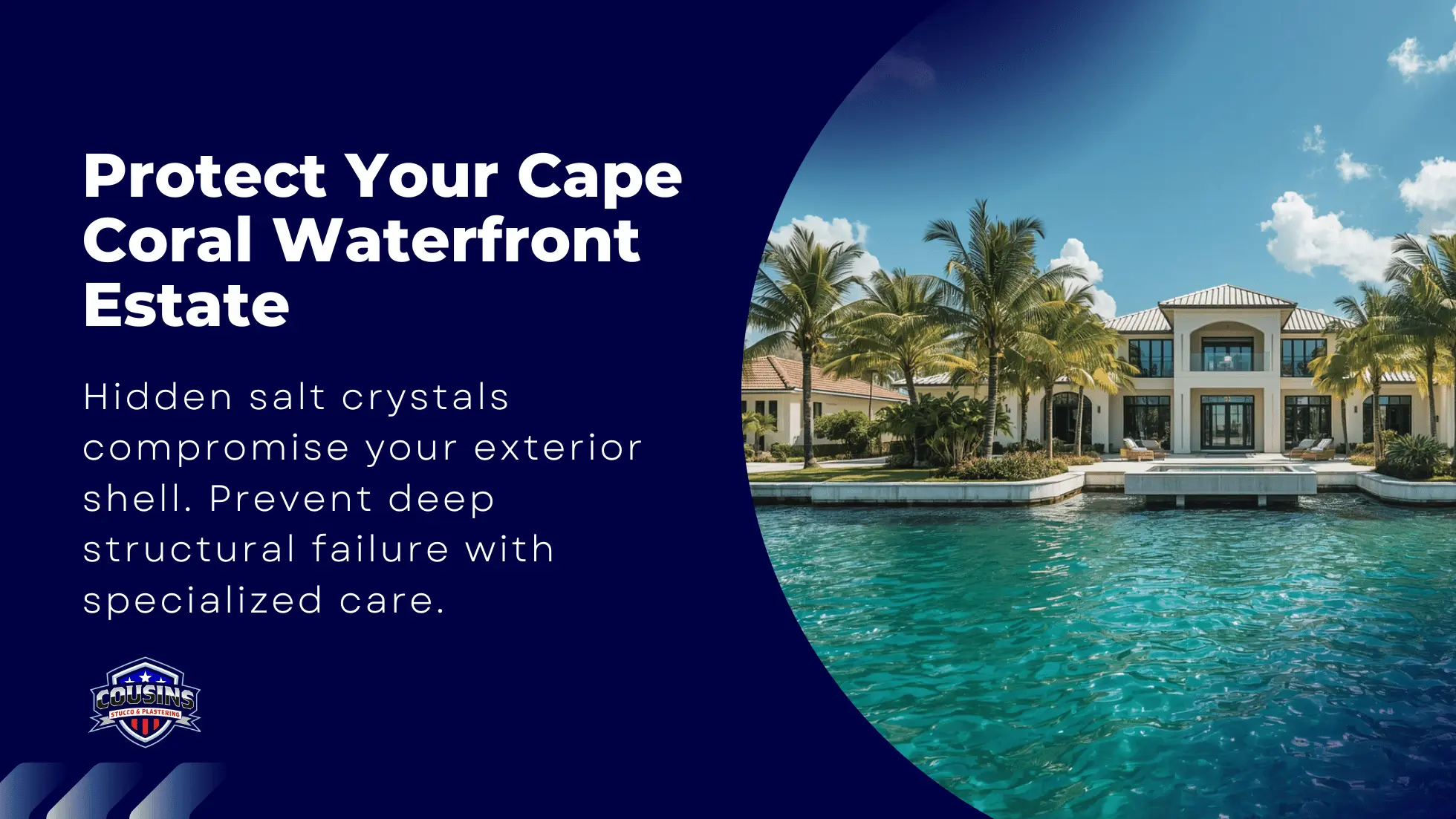
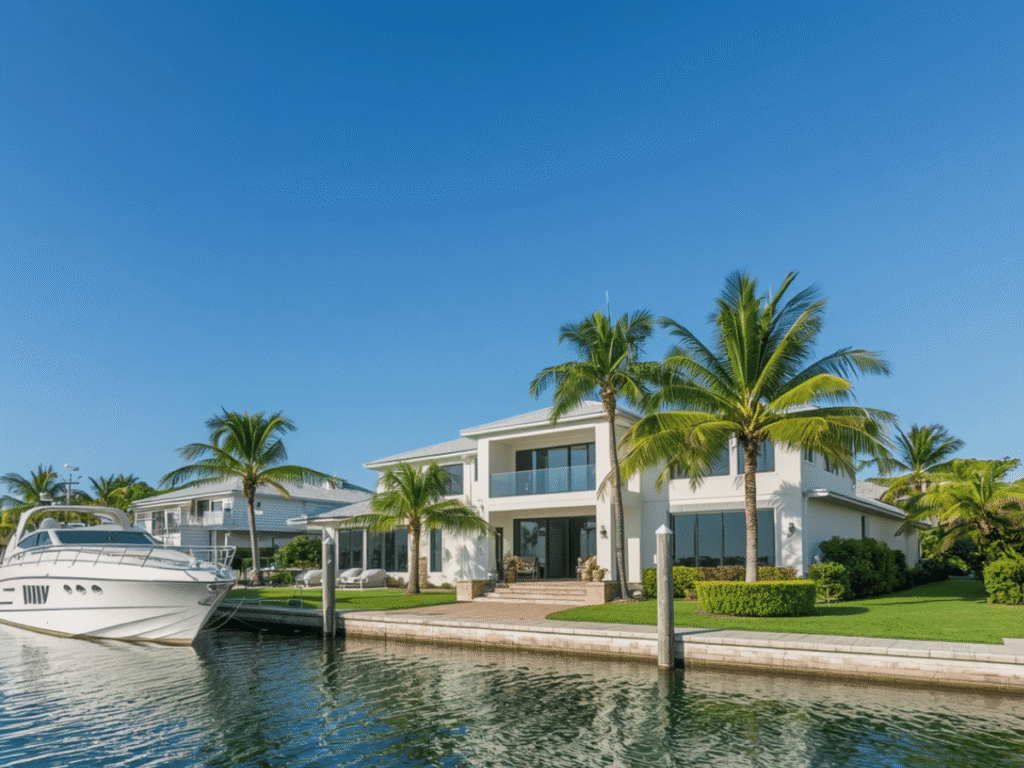
Owning a waterfront property along Cape Coral’s expansive canal system offers unparalleled scenic views and direct access to the Gulf. However, the spectacular location exposes your home’s exterior to a relentless, corrosive environment year round. The combination of coastal humidity, intense sun, and airborne marine salt creates a harsh cocktail that breaks down building materials. Implementing specialized stucco care for waterfront properties: fighting salt air corrosion in Cape Coral is essential to preserving both the structural integrity and aesthetic value of your estate.
At Cousins Stucco, we offer marine-grade exterior coating and maintenance solutions tailored for canal-front homes. Without proactive maintenance, salt crystals slowly compromise your exterior shell, leading to deep structural failures. Partnering with local specialists who understand marine environmental defense ensures your coastal home remains a beautiful, resilient sanctuary.
The Destructive Science of Salt Crystallization
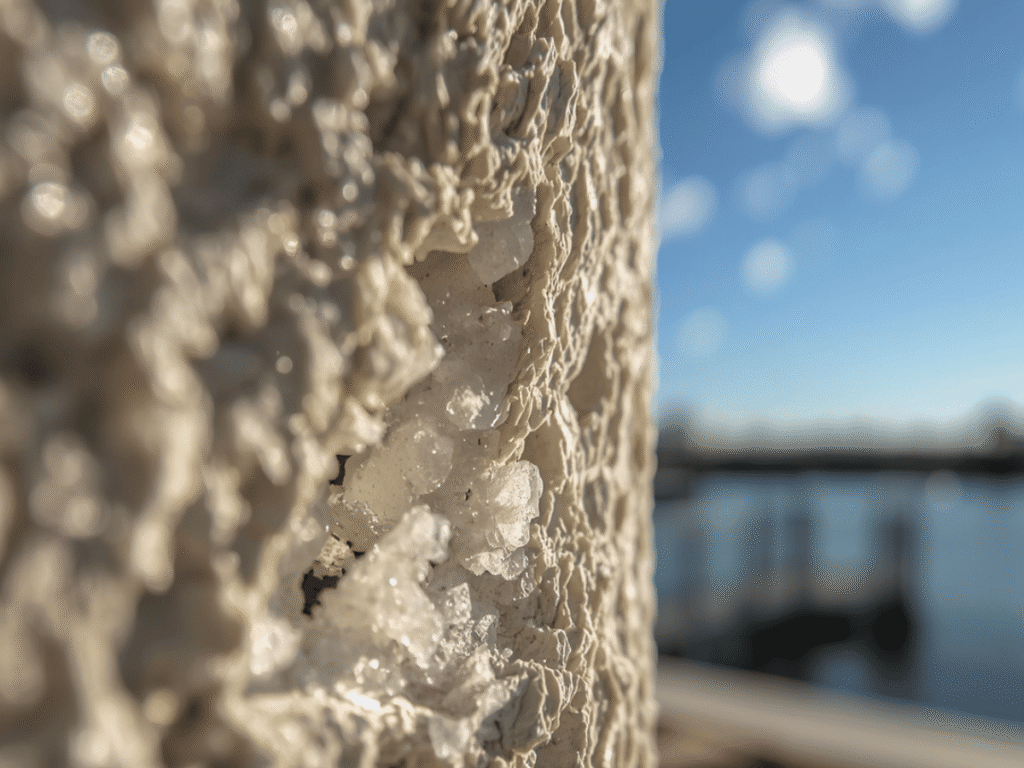
Salt air corrosion does not just sit on the surface of your home; it actively works its way into the porous matrix of the plaster finish.
- The moisture entry: Humid sea breezes carry microscopic salt spray directly onto your exterior walls.
- The drying cycle: The intense Florida sun evaporates the moisture, leaving behind pure salt deposits trapped inside the pores.
- Subflorescence pressure: As the trapped salt re-crystallizes and expands, it exerts immense internal pressure that shatters the surrounding cement bond from within.
Designing a Resilient Barrier Over Concrete Block
Waterfront homes in Lee County require heavy duty defense strategies starting at the very base of the structure. Putting standard materials on a canal front property guarantees premature deterioration.
- The CMU foundation system: True coastal construction utilizes a robust traditional stucco system applied directly over the concrete block core.
- The synthetic upgrade: For elite protection, an Exterior Insulation and Finish System (EIFS) finish coat is applied over the foundational system to provide flexible, salt resistant defense.
- Integrated drainage tracks: Advanced EIFS finishes utilize a built-in water-resistive drainage plane that allows any incidental moisture to escape safely away from the primary structure.
Eliminating Metal Vulnerabilities with Premium Vinyl
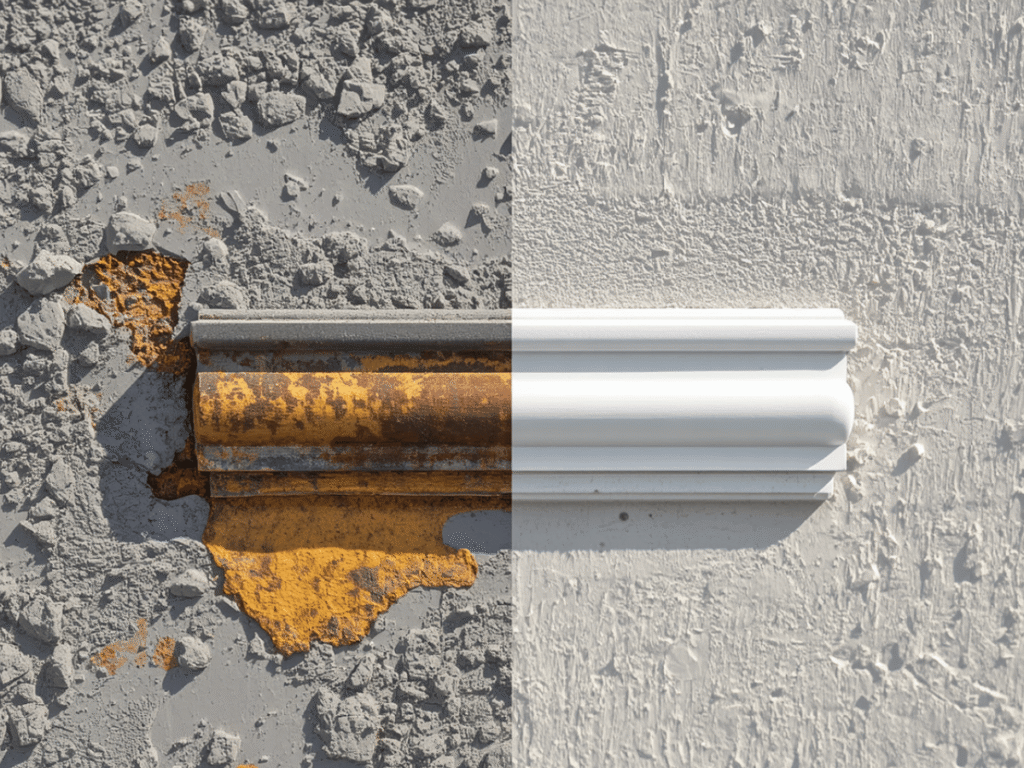
The fastest way to destroy a waterfront exterior is by using traditional metal lath or zinc coated trim accessories. Salt air destroys these components with alarming speed.
- Rust expansion disasters: When metal trim pieces oxidize, they swell up to ten times their original size, fracturing the surrounding plaster.
- The vinyl standard: Elite marine applications rely strictly on high grade vinyl casing beads and termination beads that completely resist salt water degradation.
- Strategic stress relief: Utilizing vinyl control joints and deep architectural reveals allows the structure to flex during heavy coastal winds without developing entry points for salt spray.
Essential Maintenance Protocols for Canal Front Homes
Defending a waterfront estate requires a consistent maintenance schedule designed to disrupt the salt accumulation cycle before it does permanent harm.
- Regular low pressure rinsing: Homeowners should gently rinse exterior walls with clean, fresh water quarterly to dissolve surface salt crusts.
- Elastomeric protective coatings: Every five to seven years, apply premium elastomeric paint coatings to seal porous surfaces while maintaining flexibility.
- Termination line inspections: Constantly monitor the bottom casing beads and foundation transitions to ensure no salt crusts are blocking natural drainage tracks.
Recognizing Early Signs of Marine Exterior Distress
Catching environmental wear early saves your property from complex, multi phase remediation projects later on.
- Efflorescence vs salt spray: Distinguish between harmless surface salt deposits and internal lime leaching out through structural cracks.
- Blistering paint films: Bubbling or peeling paint often indicates that salt has trapped moisture underneath the topcoat, destroying the adhesion.
- Soft spots and delamination: Areas that feel soft to the touch or sound hollow when tapped mean the plaster coating has separated from the underlying block.
Frequently Asked Questions
Why is salt air more damaging to stucco than regular inland humidity?
Salt is highly hygroscopic, meaning it continuously attracts and holds moisture from the air. This characteristic keeps your exterior walls damp for much longer periods than an inland home, accelerating chemical breakdown and mold growth.
Can I use a pressure washer to clean salt off my waterfront home?
You should never use high pressure washing on exterior plaster, as it forces water deep into the porous material and destroys the surface texture. Utilize a low pressure chemical wash combined with a soft water rinse to safely dissolve marine salt.
How do vinyl casing beads improve waterfront exterior performance?
Vinyl accessories are completely impervious to electrochemical corrosion caused by salt water exposure. Unlike metal options, vinyl casing beads will never rust, stain your walls, or expand and crack the surrounding plaster matrix.
What is the purpose of adding reveals and control joints to coastal homes?
Waterfront properties face high wind pressures and dramatic thermal shifts from the open water. Vinyl reveals and control joints break the large wall surfaces into smaller, manageable sections that expand and contract safely without fracturing.
Is an EIFS finish suitable for a Cape Coral canal front home?
Yes, when applied over a proper foundational stucco system on concrete block, an EIFS finish is highly effective. The acrylic based finish coat resists salt penetration beautifully and provides excellent flexibility against coastal temperature swings.
How often should a waterfront home be professionally inspected for damage?
Waterfront properties should undergo a professional exterior assessment at least once a year. Catching minor micro fractures and sealing termination lines before the summer tropical storm season prevents catastrophic saltwater intrusion.
Conclusion
Living on the Cape Coral water is a dream that requires vigilant, specialized property care. Allowing salt air corrosion to go unchecked guarantees structurally devastating and financially draining repairs down the road. By investing in premium vinyl accessories, proper CMU foundational systems, and advanced drainage finishes, you ensure your home stands strong against the gulf elements. Work with certified plastering experts who treat coastal defense as a precise science rather than a guesswork project. Secure your peace of mind and protect your real estate investment by prioritizing professional marine grade exterior maintenance today.