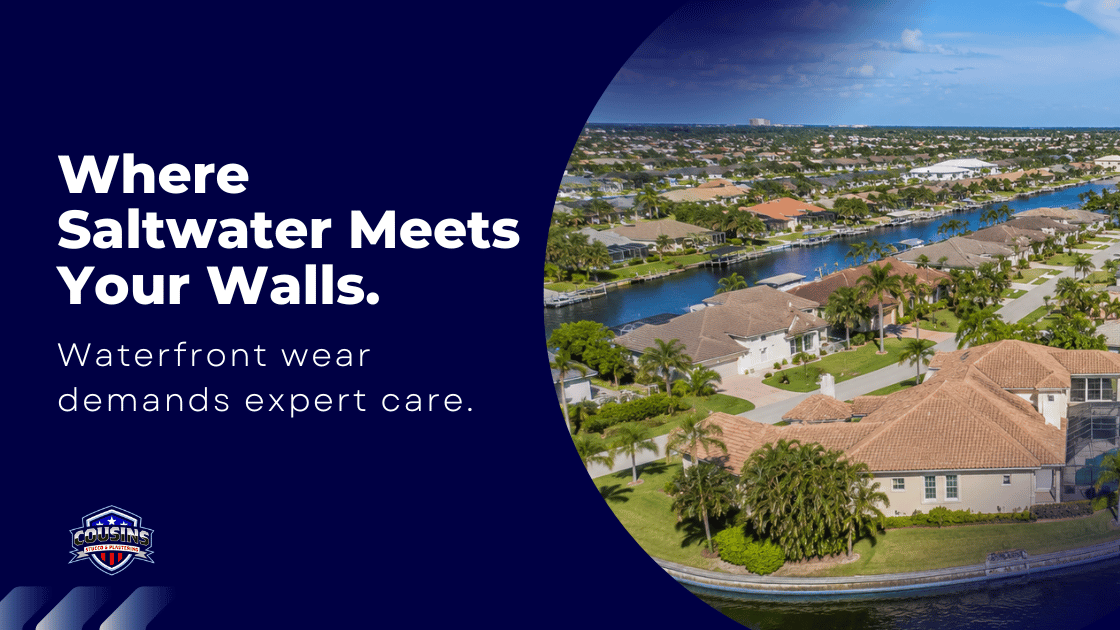
Canal homes in Cape Coral face an accelerated cycle of stucco deterioration driven by salt air, relentless humidity, and Florida’s extreme thermal swings. Addressing developing issues early with coastal-appropriate repair methods helps protect your home’s exterior and maintain the long-term performance of the stucco system.
Key Takeaways
- Salt air and consistently high humidity create a uniquely demanding environment for exterior stucco systems.
- Cracks that continue to widen, appear around windows or doors, or reappear after previous repairs should be professionally evaluated.
- Existing metal components within older wall assemblies may be more susceptible to corrosion in coastal environments, while vinyl accessories provide excellent durability for repairs and new installations.
- Properly maintained stucco systems perform best when repaired using materials compatible with the existing wall assembly.
- Routine inspections help identify developing issues before repairs become more extensive.
- Canal-facing homes benefit from more frequent exterior inspections, particularly following major storm events.
What Makes Cape Coral’s Canal Environment So Demanding on Stucco
Cape Coral is home to more than 400 miles of canals, creating a unique coastal environment that continuously exposes exterior wall systems to salt air, humidity, intense sunlight, and seasonal storms.
Salt particles carried through the air settle on exterior surfaces while the surrounding waterways contribute additional moisture to the local environment. Combined with Southwest Florida’s year-round humidity and frequent UV exposure, these conditions accelerate normal weathering of exterior finishes.
Homes located directly on canals often experience greater exposure than properties farther inland due to increased moisture, reflected sunlight, and wind-driven salt spray.
Understanding these environmental conditions allows repair methods to be tailored specifically for coastal properties rather than relying on approaches better suited to inland climates.
The Five Stucco Problems Canal Homeowners See Most
Cracking: The Most Visible Symptom
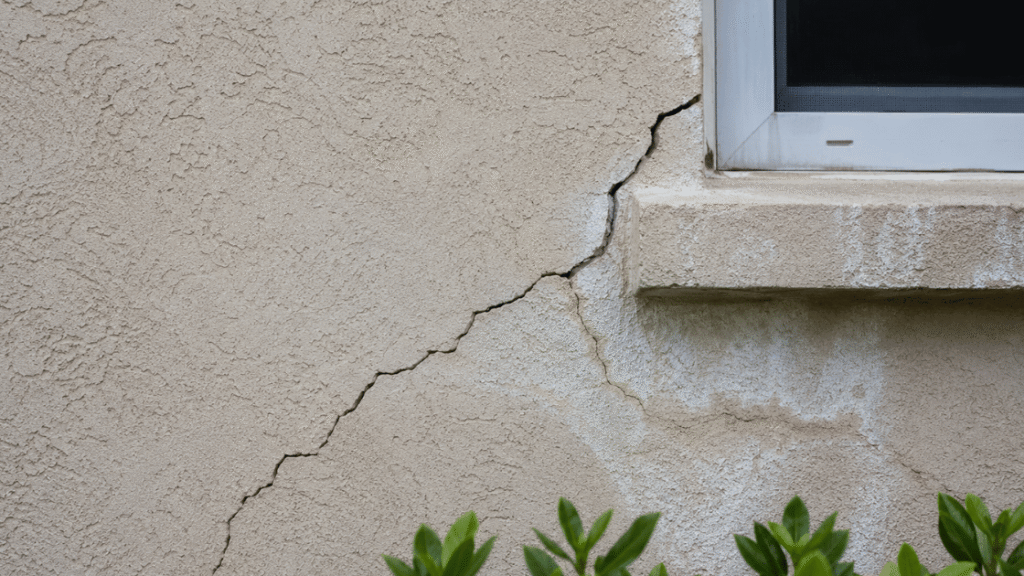
Cracks are among the most common concerns homeowners notice.
Thermal expansion and contraction, seasonal weather changes, and normal building movement all contribute to cracking over time, particularly around windows, doors, and other wall transitions.
While some hairline cracking may be part of normal aging, cracks that continue to expand, follow diagonal patterns, or repeatedly return should be professionally evaluated.
Mold and Mildew
Cape Coral’s humidity encourages mold and mildew growth, particularly on shaded walls that remain damp longer after rainfall.
Surface growth may simply require cleaning, while recurring staining may indicate moisture conditions that should be evaluated as part of the overall wall system.
Corrosion Within Older Wall Systems
Many older stucco systems incorporate metal reinforcement or other metal components.
In coastal environments, prolonged exposure to salt air may accelerate corrosion, which can contribute to cracking, staining, or localized deterioration over time.
For modern repairs and installations, compatible vinyl accessories—including casing beads, termination beads, control joints, and reveals—provide excellent durability in Southwest Florida’s coastal environment.
Bubbling and Delamination
Bubbling, bulging, or hollow-sounding stucco may indicate that sections of the finish have separated from the underlying substrate.
This condition often requires removal of the affected material so the wall assembly can be evaluated and repaired before new stucco is applied.
Movement-Related Cracking
Some cracking develops as buildings naturally settle or experience structural movement.
Because canal-area soils may experience changing moisture conditions, movement-related cracking should be evaluated to determine the appropriate repair approach before cosmetic repairs are performed.
Repair Methods for Coastal Properties
Successful coastal repairs focus on restoring the integrity of the existing stucco system while using materials compatible with Southwest Florida’s demanding climate.
Compatible Stucco Materials
Repair materials should be selected based on the existing stucco system and the specific conditions of the project.
Using compatible materials helps maintain proper adhesion, appearance, and long-term performance.
Vinyl Accessories
Proper integration of vinyl casing beads, control joints, expansion joints, termination beads, and architectural reveals contributes to a well-performing stucco system.
These components help create clean transitions throughout the exterior while accommodating normal building movement.
Things to Know
- Salt air can affect homes located well beyond the immediate canal shoreline.
- Canal-facing homes often benefit from more frequent exterior inspections due to increased environmental exposure.
- Bubbling or hollow-sounding stucco should be professionally evaluated rather than simply covered with new finish material.
- Following major storms, exterior walls should be visually inspected for new cracks, impact damage, or changes in the existing finish.
- Routine maintenance helps preserve the appearance and performance of the stucco system.
Routine Inspections
For canal properties, periodic inspections are recommended to evaluate:
- Surface cracking
- Localized staining
- Impact damage
- Condition of casing beads
- Control joints
- Termination beads
- Sealant joints
- Areas affected by recent storms
Evaluating the overall wall system—not just isolated cracks—helps determine the most appropriate repair approach.
Frequently Asked Questions
How do I know whether a crack should be evaluated?
Hairline cracks may develop naturally over time, but cracks that expand, return after repairs, or appear around windows, doors, or other wall transitions should be professionally evaluated.
Why do canal homes require more maintenance?
Canal homes experience greater exposure to humidity, salt air, reflected sunlight, and seasonal storms than many inland properties, placing additional demands on exterior wall systems.
Can I simply paint over mold?
Painting over mold does not address the underlying cause.
Recurring mold or staining should be evaluated to determine whether moisture conditions are contributing to the problem before refinishing the surface.
What makes coastal stucco repairs different?
Coastal repairs take into account the environmental conditions unique to Southwest Florida, including salt air, humidity, thermal movement, and storm exposure.
Repair methods are selected based on the existing stucco system and the property’s specific conditions.
Conclusion
Living on one of Cape Coral’s canals offers exceptional waterfront living, but it also places additional demands on your home’s exterior.
Routine inspections, timely repairs, and repair methods designed for Southwest Florida’s coastal environment help maintain the appearance and long-term performance of your stucco system.
Cousins Stucco provides residential and commercial stucco and EIFS services throughout Cape Coral and surrounding Southwest Florida communities. If you’ve noticed new cracks, bubbling, staining, or other changes to your exterior, our team can evaluate your property and recommend repair solutions based on the condition of your existing wall system.