
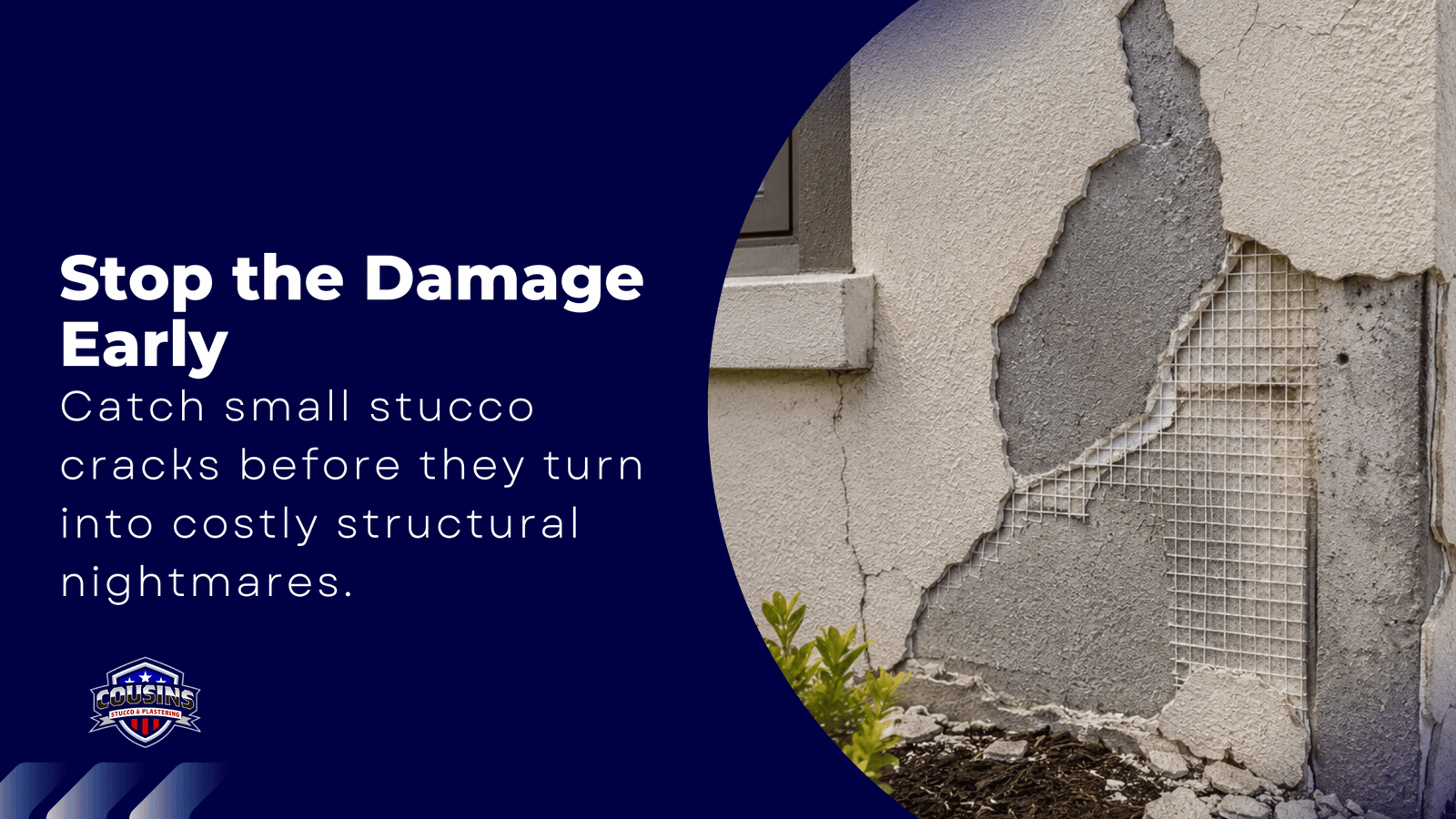
If you’ve noticed cracks creeping across your exterior walls, bubbling paint near the roofline, or chunks of stucco that have straight-up fallen off, you’re not alone. Fort Myers homes face some of the harshest exterior conditions in the country — intense UV exposure, salt air, hurricane-force winds, and relentless humidity. Your stucco takes all of that abuse daily. Eventually, it’s going to show it.
The good news? Most stucco problems are completely fixable. The bad news? Ignoring them turns a $300 patch job into a $5,000 restoration project fast. Here’s everything you need to know about stucco repair in Fort Myers — what causes damage, what the repair process looks like, and when you should absolutely stop DIYing it.
Why Fort Myers Is Especially Hard on Stucco
Southwest Florida’s climate isn’t just warm — it’s punishing. The combination of factors working against your stucco here is genuinely unusual compared to the rest of the country.
Salt air corrosion is one of the biggest culprits. If you’re within a few miles of the Gulf, Fort Myers Beach, or any of the estuaries cutting through the region, airborne salt particles are constantly landing on your exterior walls. Salt accelerates the breakdown of the bond between stucco layers and the substrate beneath them, which causes delamination — that hollow-sounding, bubbled surface you might notice when you tap the wall.
Thermal expansion and contraction plays a major role too. Fort Myers sees extreme heat swings between summer daytime highs and cooler winter nights. Stucco expands and contracts with those temperature changes. Over time, that repetitive movement creates hairline cracks that widen with each cycle.
Storm season adds the finishing blow. Flying debris, sustained wind pressure, and the sheer volume of water that penetrates even tiny surface cracks during a hard rain — all of it compounds existing vulnerabilities. After a major storm passes through Cape Coral, Lehigh Acres, or Fort Myers Beach, stucco repair calls spike fast.
The point is this: your stucco isn’t failing because it was installed poorly (though that’s possible). It’s failing because it’s doing a hard job in difficult conditions.
The Most Common Types of Stucco Damage You’ll See Locally
Not all stucco problems are the same, and the repair approach depends entirely on what you’re dealing with. Here’s a breakdown of the damage types Cousins Stucco regularly handles across Fort Myers and Southwest Florida.
Hairline Cracks
These are the thin, surface-level cracks that look cosmetic but often aren’t. Left alone, water infiltrates them during rain, expands the crack during heat, and eventually works its way behind the stucco layer.
Structural Cracks
Wider than a hairline, often diagonal, and sometimes accompanied by shifting at the wall plane. These can indicate foundation settlement or structural movement and should be evaluated seriously before any cosmetic repair happens.
Stucco Delamination
This is when the stucco pulls away from the wall beneath it, creating hollow pockets. Tap on a suspect area — if it sounds hollow versus solid, delamination has started. These sections need to be removed and replaced, not just patched over.
Efflorescence
That white powdery film that appears on stucco surfaces? That’s efflorescence — mineral deposits left behind as moisture pushes through the stucco and evaporates. It signals moisture infiltration and should be addressed before resurfacing.
Impact Damage
Holes, gouges, and missing chunks from storm debris or physical impact. Straightforward to repair structurally, but texture matching is where it gets tricky — especially on older homes with a distinctive float or sand finish.
How the Stucco Repair Process Actually Works
A proper stucco repair isn’t just slapping patching compound over a crack and calling it done. Here’s what a professional repair sequence looks like from start to finish.
1. Damage Assessment
Before touching the wall, a qualified contractor evaluates the full scope. This means tapping for hollow areas, checking for moisture intrusion, looking at the surrounding structure, and identifying whether the issue is isolated or systemic. Skipping this step is what leads to repairs that fail within a year.
2. Surface Preparation
Damaged stucco sections are cut out cleanly — not just the visible damage, but everything around it that’s compromised. This might mean removing a patch two feet wide to fix a crack that looks six inches long. Getting clean, solid edges is non-negotiable for a repair that holds.
3. Substrate and Moisture Barrier Check
Once the damaged stucco is removed, the underlying substrate (typically concrete block or wood framing with lath) gets inspected. If moisture has penetrated, that damage has to be addressed before new stucco goes on. Installing over a wet or damaged substrate is a guaranteed callback.
4. Scratch Coat Application
The first layer of new stucco — the scratch coat — is applied and intentionally scored to create mechanical adhesion for the next layer. This gets time to cure properly.
5. Brown Coat
The second coat builds up the thickness and creates a level surface. This is where the structural integrity of the repair is really established.
6. Finish Coat and Texture Matching
This is where skill separates average contractors from good ones. The finish coat has to match the existing texture — whether that’s a smooth finish, a float finish, a sand texture, or something more custom. Getting this wrong means a patch that’s obviously visible. Getting it right means the repair disappears into the wall.
7. Paint and Sealing
Once cured, the repaired section gets primed and painted to match the surrounding wall. A quality elastomeric paint adds an extra moisture barrier that extends the repair’s life significantly in a climate like Fort Myers.
Stucco Crack Repair: When DIY Makes Sense and When It Doesn’t
Small hairline cracks under 1/16 inch wide on an otherwise solid, non-delaminated surface? You can reasonably address those yourself with a paintable elastomeric caulk and some patience. It’s not glamorous, but it keeps water out until you can get a professional in for a more thorough evaluation.
Anything beyond that — wide cracks, diagonal cracks, crumbling edges, hollow sections — should go to a professional. Here’s the reality: stucco crack repair done wrong doesn’t just fail cosmetically. It traps moisture behind the new material, creates a worse situation than the original crack, and can lead to mold, wood rot, and interior water damage. The repair cost compounds quickly.
There’s also the texture matching problem. Even experienced DIYers find it nearly impossible to match an existing stucco texture convincingly. The tools, technique, and material ratios matter enormously. A patch that’s texturally off sticks out like a paint splatter on a white shirt — permanently.
EIFS vs. Traditional Stucco: Know What You Have
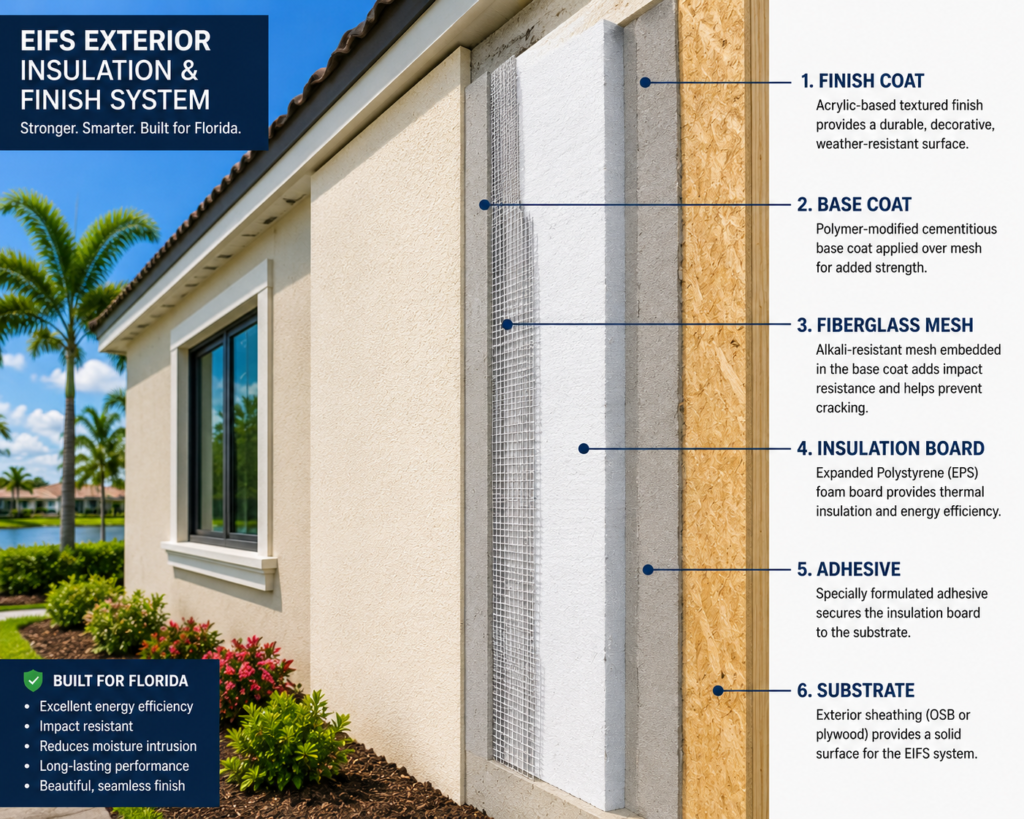
Some Fort Myers homes — particularly those built in the 1980s through early 2000s — have EIFS (Exterior Insulation and Finish Systems) rather than traditional three-coat stucco. It looks similar but behaves very differently and requires a completely different repair approach.
EIFS is a foam-based insulation board system with a thin acrylic finish coat over it. It’s softer, more impact-prone, and critically — if water gets behind it, it has nowhere to go. EIFS moisture intrusion problems can rot the entire substrate before any visible exterior damage appears.
Cousins Stucco handles both traditional stucco repair and EIFS repair across Fort Myers and the broader Southwest Florida region. If you’re not sure what system your home has, that’s part of the initial assessment conversation.
Why Texture Matching Is Harder Than It Looks
This deserves its own section because it’s consistently where homeowners get burned by low-quality repair work. Fort Myers homes have a wide variety of stucco finishes — some are smooth, some have a medium float texture, some have heavy sand finishes, and some are custom blends applied by the original contractor decades ago.
A patch that doesn’t match the surrounding texture and finish visually jumps out from 30 feet away. Worse, when you paint over it, the sheen difference makes the mismatch even more obvious. Proper texture matching requires experience with the specific finish types common to Southwest Florida construction, the right aggregate ratios, and the manual skill to apply it consistently.
This is one of the primary reasons choosing a contractor with deep regional experience — one who’s worked across Fort Myers, Cape Coral, Estero, Bonita Springs, and surrounding areas — matters more than just finding the cheapest bid.
Signs You Need More Than a Repair
Sometimes a targeted repair isn’t the right call. Here are the situations where stucco resurfacing or full restoration makes more financial sense than patching.
- Damage is spread across more than 25–30% of the total exterior surface
- Multiple repair attempts have failed in the same areas
- The home is approaching 20–30+ years without exterior maintenance
- Storm damage has affected large wall sections simultaneously
- The existing finish is dated and you want a uniform, modern appearance
In these cases, resurfacing — applying a new finish coat over the prepared existing stucco — delivers better long-term value than accumulating individual patch repairs over time. Cousins Stucco handles full resurfacing and restoration projects alongside targeted repairs throughout Southwest Florida.
Choosing the Right Stucco Contractor in Fort Myers
Florida has no shortage of contractors claiming to do stucco work. The quality gap between them is enormous. Here’s what to actually look for when you’re making this decision.
- State licensing: Florida requires stucco contractors to hold a valid plastering/stucco license or work under a licensed general contractor. Verify it through the DBPR database before signing anything.
- Local references: A contractor who’s worked extensively in Fort Myers and Southwest Florida knows the specific climate conditions, common construction styles, and material behavior in your region. Ask for local project references.
- Written scope of work: Never accept a vague verbal estimate. Your contract should specify the repair approach, materials, number of coats, texture matching method, and warranty terms.
- Insurance: Workers’ comp and general liability are non-negotiable. If an uninsured crew member gets hurt on your property, you’re potentially liable.
Ready to get an honest assessment of what your home actually needs? Contact Cousins Stucco to schedule a professional inspection and get a detailed written estimate for your Fort Myers property.
Frequently Asked Questions About Fort Myers Stucco Repair
How long does stucco repair last in the Fort Myers climate?
A properly executed repair using quality materials should last 10–20 years in normal conditions. Salt air proximity and storm exposure can shorten that, which is why regular inspections every few years are a smart maintenance habit in Southwest Florida.
Can stucco repair be done during rainy season?
Yes, but timing matters. Active rain interrupts curing, so work is scheduled around weather windows. An experienced contractor plans around this — it’s not a reason to delay needed repairs indefinitely.
Will the repaired area match the rest of my wall?
With professional texture matching and proper painting, the repair should blend well enough to be unnoticeable. The quality of that match depends heavily on the skill level of the contractor and how well the paint color is matched.
Is stucco damage covered by homeowners insurance in Florida?
Sometimes. Storm-related damage is often covered under standard Florida homeowners policies, but wear-and-tear deterioration typically isn’t. Document damage immediately after any storm event and contact your insurer before beginning repairs.
How do I know if my stucco damage is cosmetic or a structural issue?
Diagonal cracks, cracks that are wider at one end, or any cracking accompanied by visible wall movement should be evaluated by a professional. Horizontal and vertical hairline cracks that don’t follow structural patterns are more likely cosmetic — but when in doubt, get an expert opinion before assuming.