
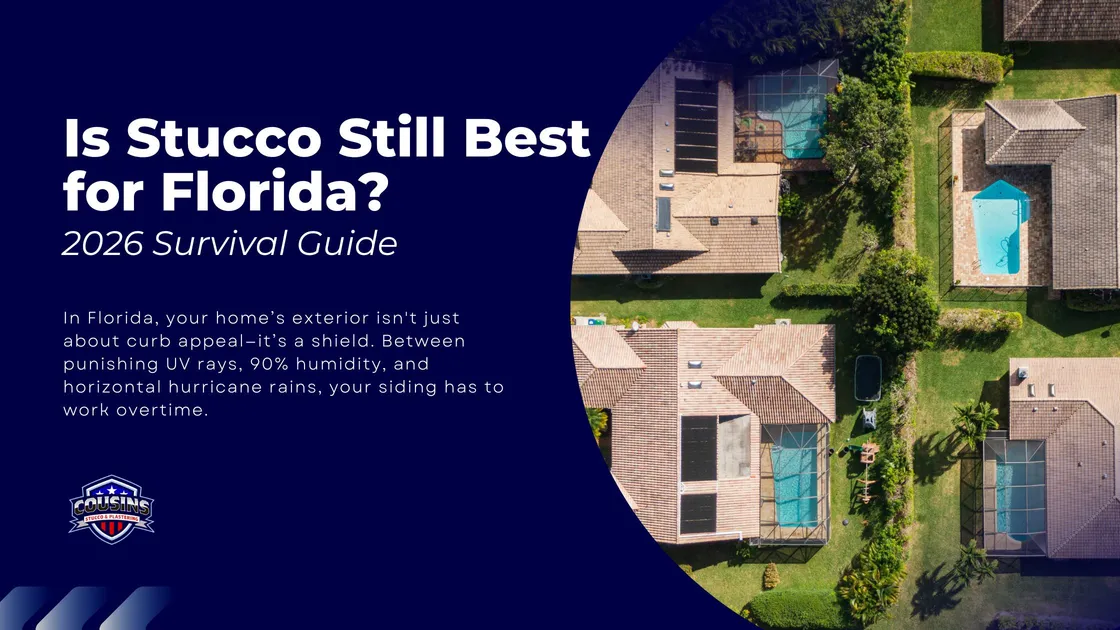
In Florida, your home’s exterior isn’t just about curb appeal—it’s a shield. Between punishing UV rays, 90% humidity, and horizontal hurricane rains, your siding has to work overtime. It’s no wonder stucco is the “unofficial” face of the Sunshine State.
But is it actually the best choice for your home? Let’s look past the aesthetics and get into the physics of Florida living.
Following the record-breaking storm seasons of the mid-20s, Florida building codes have tightened. In 2026, we aren’t just looking at how stucco looks—we’re looking at its ‘Perm Rating’ and drainage efficiency.
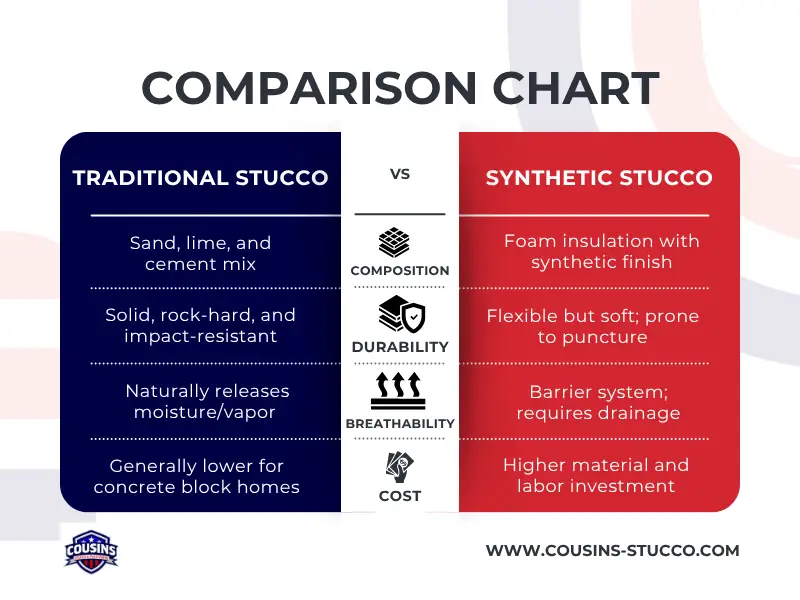
When people talk about stucco, they are usually referring to one of two very different systems. Choosing the wrong one for your neighborhood can be a costly mistake.
- Traditional (Hard-Coat) Stucco: A mix of sand, lime, and cement applied over a metal lath or concrete block. It is rock-hard, highly impact-resistant, and “breathes” better. This is the Florida standard for concrete block homes.
- Synthetic Stucco (EIFS): “Exterior Insulation and Finish Systems” use foam insulation boards with a synthetic coating. It’s a better insulator and doesn’t crack as easily, but it is much softer (prone to woodpecker or hail damage) and can trap moisture if not installed with a drainage plane.
The Verdict: Traditional stucco is usually preferred in Florida for its durability against debris, while EIFS is favored for high-efficiency modern designs—provided you hire a specialist who understands Florida drainage.
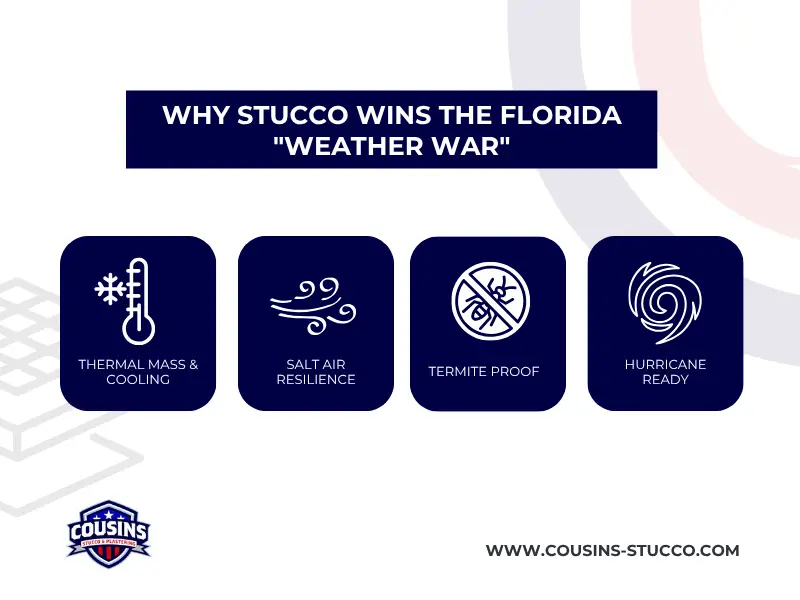
Why Stucco Wins the Florida “Weather War”
- Thermal Mass & Cooling: Stucco absorbs the brutal afternoon heat and releases it slowly, preventing your AC from “redlining” at 3:00 PM.
- Salt Air Resilience: Unlike metal siding that corrodes or wood that rots, stucco stands up to the salty mist of the Gulf and Atlantic.
- Hurricane Ready: It acts as a seamless shell, offering better impact resistance against flying debris than vinyl or aluminum.
- Termite Proof: Stucco over concrete block provides a solid barrier against Florida’s aggressive subterranean termites.
Red Flags: Signs Your Stucco is Failing
- Efflorescence: That white, powdery crust? That’s salt being pushed out by trapped moisture. It’s a sign of a leak.
- Rust Stains: This often means the metal mesh holding the stucco up is corroding inside the wall.
- Bulging: If the wall looks “swollen,” the stucco has detached from the base—this is a structural safety hazard.
FAQ: Common Florida Stucco Questions
How often should I paint my stucco?
In Florida, you should repaint every 7 to 10 years. However, don’t just use “regular” paint; use elastomeric coatings. They are rubberized and stretch to seal hairline cracks as your house shifts.
Are small cracks normal?
Hairline cracks (the width of a credit card) are common due to Florida’s heat expansion and settling. However, any crack you can fit a dime into is a gateway for water and needs to be sealed immediately.
Can I pressure wash my stucco?
Yes, but be careful! Use a low-pressure “soft wash” setting. High pressure can blast through the finish, strip the paint, and force water deep into the substrate.
Why is my stucco turning black or green?
That’s algae or mildew thriving in the humidity. It’s usually cosmetic and can be cleaned with a bleach-and-water solution, but it’s a sign that the area stays damp and might need better sun exposure or drainage.
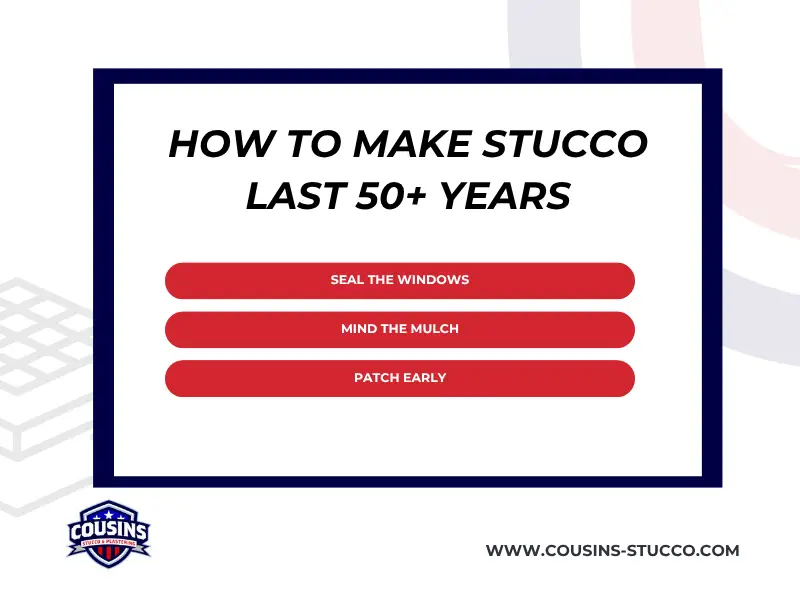
How to Make Stucco Last 50+ Years
- Seal the Windows: 90% of “stucco failure” is actually failing caulk around windows. Check these every spring.
- Mind the Mulch: Keep flower beds and mulch at least 6 inches below the stucco line to prevent moisture from wicking up into your walls.
- Patch Early: A $10 tube of exterior sealant today can save you a $10,000 remediation bill next year.
Are you noticing “spiderweb” cracks or dark stains? Don’t wait for the next tropical storm to test your seal. Contact us for a professional stucco health check today.
If you notice cracking from coastal humidity, contact our Cousins Stucco team for a free quote.