Commercial properties in Southwest Florida face some of the harshest environmental conditions in the country. From intense humidity to hurricane-driven rain, exterior wall systems must endure relentless moisture exposure. For property owners and facility managers, maintaining structural endurance against Southwest Florida salt air, humidity, and lifecycle ROI is a top priority.
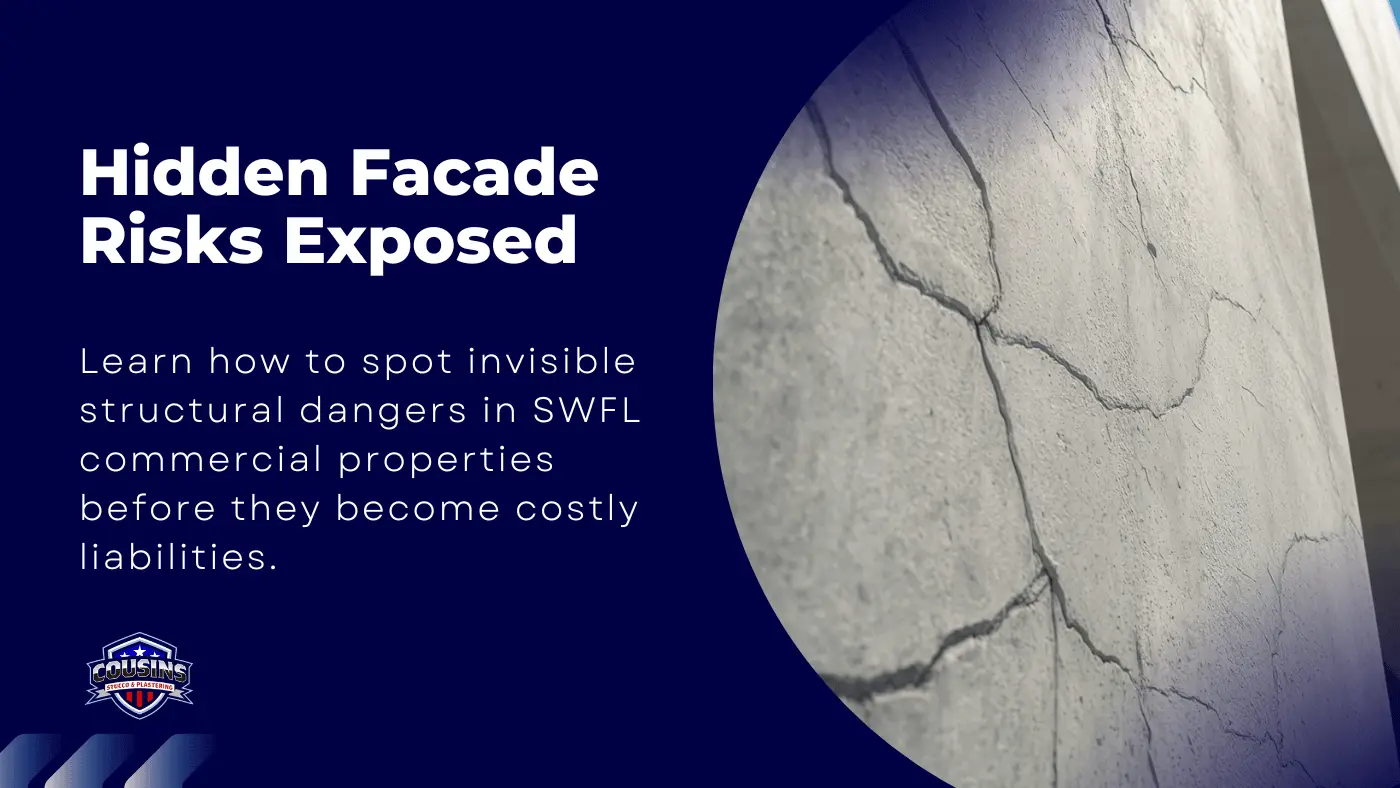
When cracks appear on a commercial exterior, it can be difficult to determine the root cause. Is it a minor aesthetic flaw caused by natural building settlement, or a warning sign of structural failure? Understanding the difference between normal settling and dangerous stucco cracks is essential for protecting your commercial asset and maximizing its long-term value.
The Reality of Structural Longevity in Southwest Florida
Every commercial building experiences minor movement over time. As a foundation settles into the regional soil, the exterior cladding absorbs microscopic shifts. In traditional stucco or multi-layered synthetic finishes, this natural movement often results in hairline surface fractures. These cosmetic flaws rarely threaten the structural envelope.
However, Southwest Florida salt air and high humidity quickly turn minor cracks into major liabilities. Coastal air carries microscopic salt crystals that penetrate deep into porous facade materials. Once inside, moisture and salt accelerate the degradation of underlying components, turning an ignored crack into a costly structural issue.
Investing in premium cladding and proper installation techniques directly impacts your lifecycle ROI. A resilient exterior envelope lowers maintenance costs, prevents interior mold remediation, and preserves the appraised value of your commercial real estate for decades.
Decoding Stucco and Cladding Fractures
To properly assess exterior damage, commercial property owners must evaluate the pattern, width, and location of the fractures.
Hairline Fractures (Normal Settling)
- Microscopic lines under 1/16 of an inch wide
- Spiderwebbing across large, flat wall spans
- Radiating slightly from the corners of windows
- Caused by natural shrinkage during the initial curing phase of the substrate
Structural and Moisture Driven Cracks (Dangerous Defect)
- Fractures wider than 1/8 of an inch
- Stair-step patterns or bulging surfaces
- Found along floor lines, major structural joints, or termination boundaries
- Caused by significant structural shifting or improper expansion joint placement
Precision Engineering: Advanced Commercial EIFS Installation in Naples
Preventing premature facade failure requires a deep understanding of modern building science and strict adherence to material boundaries. For projects utilizing advanced exterior insulation and finish systems, executing a flawless Commercial EIFS Installation in Naples demands precision engineering.
Engineered Moisture Management over DensGlass Sheathing
Modern commercial EIFS is designed as a sophisticated, multi-layered water-managed assembly. When installed correctly over high-performance DensGlass sheathing, the system creates a highly efficient barrier against the elements.
The assembly relies on a dedicated water-resistive drainage plane applied directly over the sheathing. This ensures that any moisture penetrating the outer finish layer is safely captured and routed downward. Using an integrated drainage track and engineered drainage systems, water is directed safely away from the structural wall assembly. This complex network of internal weeps allows the facade to breathe and drain efficiently, protecting the building from humid coastal air.
Critical Material and Substrate Restrictions
Achieving elite craftsmanship requires strict adherence to legal standards and structural realities:
- No Direct-to-Masonry EIFS: Synthetic systems must never be applied directly onto concrete block (CMU). For concrete block substrates, installers must apply a traditional stucco system first. Once cured, an EIFS finish coat can be applied on top to deliver a premium, seamless aesthetic.
- The STO Finish Disclaimer: Applying a premium STO finish over traditional stucco systems is a popular choice for achieving a high-end design line. While this creates a stunning aesthetic, property owners must note that this specific cross-system application is not warrantied by the manufacturer.
The Role of High-Performance Accessories
The longevity of a commercial facade depends heavily on its trim and accessory components. In coastal areas like Southwest Florida, material selection dictates the lifespan of the entire system.
Elite commercial installations rely exclusively on high-performance vinyl accessories. Components such as vinyl casing beads, termination beads, expansion joints, control joints, and reveals handle thermal movement without degrading.
Unlike metallic alternatives, vinyl is entirely impervious to salt air corrosion. It will not rust, pit, or stain the surrounding facade. To ensure proper moisture shedding along edge transitions or drainage lines in stucco, specialized vinyl components form a precise termination line or casing bead, preventing water from migrating behind the cladding system.
Protecting Your Commercial Investment
Identifying the difference between cosmetic settling and dangerous cracking requires an experienced eye. Addressing minor issues early prevents salt air and moisture from compromising your building envelope, ensuring your property remains a beautiful, durable asset.
Frequently Asked Questions
Why are vinyl accessories used instead of metal in coastal climates?
Metal and zinc accessories degrade rapidly when exposed to saltwater mist and high humidity, leading to rust, staining, and structural failure. Vinyl accessories are entirely immune to coastal corrosion, ensuring the long-term integrity of the facade.
What substrate restrictions exist for Commercial EIFS Installation in Naples?
EIFS cannot legally be applied over Type 5 combustible substrates, including wood-frame, plywood, or OSB sheathing. Additionally, EIFS cannot be applied directly to concrete block. CMU substrates require a traditional stucco system base before applying an EIFS finish coat.
How do modern EIFS systems manage moisture penetration?
Modern EIFS utilizes an advanced water-resistive drainage plane installed over DensGlass sheathing. An integrated drainage track, specialized drainage systems, and built-in weeps ensure that any moisture entering the system is quickly directed down and out of the building envelope.
What is the primary difference between normal settling and dangerous stucco cracks?
Normal settling results in hairline fractures under 1/16 of an inch due to natural building shrinkage. Dangerous cracks are wider than 1/8 of an inch, present horizontal or stair-step patterns, indicate structural shifting, and allow water to compromise the building envelope.
Conclusion
Distinguishing between minor settling and severe structural cracking is vital for the safety and preservation of your commercial asset. Ignoring deep fractures allows coastal moisture and salt air to degrade the building envelope, leading to expensive remediation, compromised structural integrity, and reduced property value. Partnering with specialists who practice precision engineering ensures your facility remains durable, compliant, and architecturally striking for decades.
Protect your commercial investment from the elements with industry-leading craftsmanship. Contact the expert team at Cousins Stucco today to schedule a comprehensive facade evaluation and ensure your building is engineered to endure.