
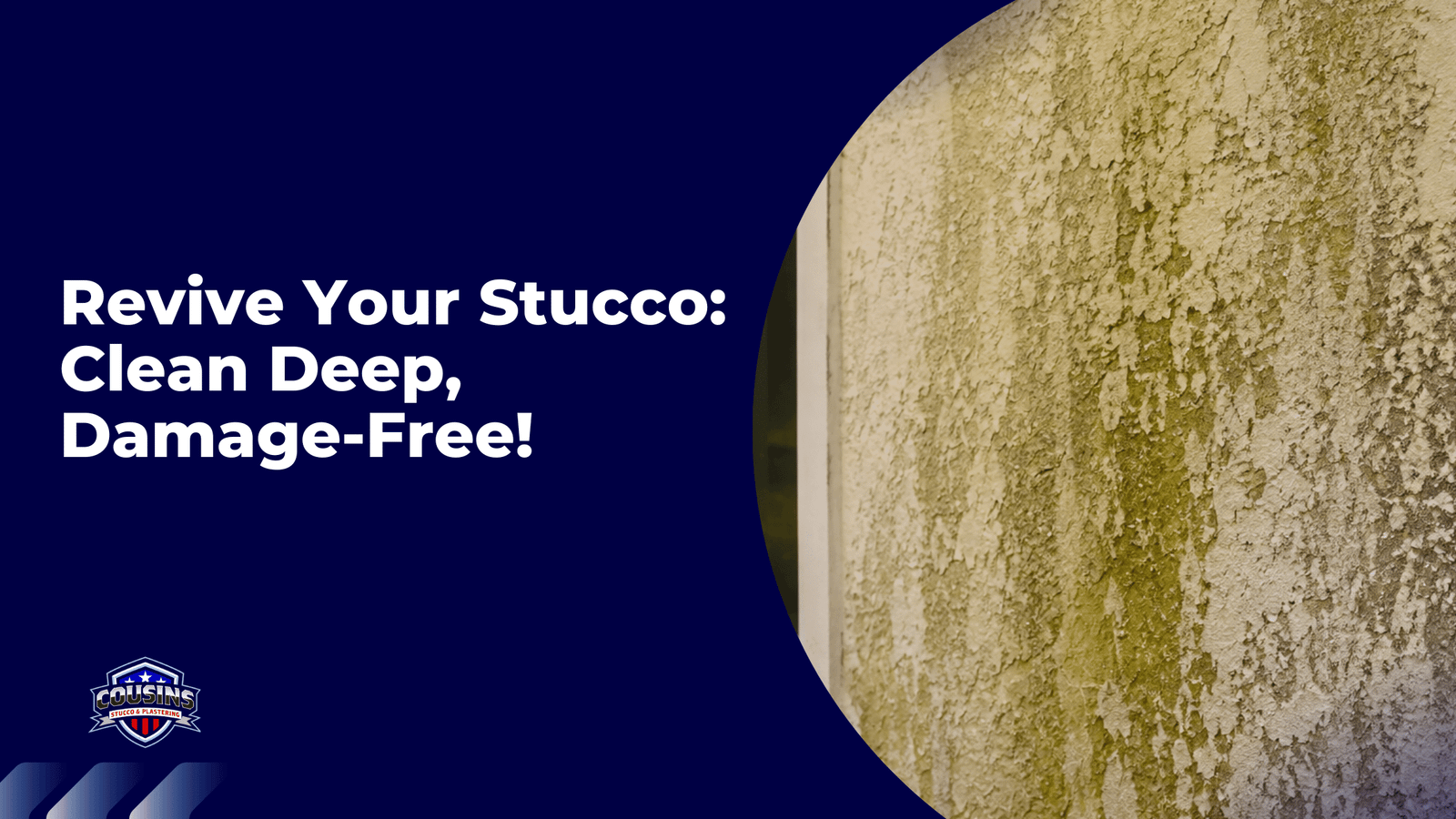
Stucco is one of the most popular exterior finishes in Southwest Florida — and for good reason. It handles the heat, it looks sharp, and when it’s properly maintained, it lasts for decades. But here’s the question that trips up a lot of homeowners: can you power wash stucco?
The short answer is yes — but with some serious conditions attached. Power washing stucco the wrong way can turn a simple cleaning job into an expensive repair project. Before you rent a pressure washer or hire a crew, here’s everything you actually need to understand.
Why Stucco Cleaning Matters More Than You Think
In Florida’s humid coastal climate — especially in areas like Naples, Cape Coral, and Fort Myers — stucco exteriors collect algae, mildew, salt residue, and dirt at a faster rate than almost anywhere else in the country. You’re dealing with salt air, intense UV exposure, and near-constant humidity. That combination creates the perfect environment for biological growth to grab hold of your exterior walls.
Letting that buildup sit isn’t just an aesthetic problem. Algae and mold can slowly degrade your stucco’s surface coating. Water that penetrates micro-cracks accelerates that process. Over time, what started as surface grime becomes a structural concern requiring full stucco repair or resurfacing.
So yes, cleaning your stucco regularly is part of responsible home maintenance. The debate is really about how you clean it.
The Real Risk: Pressure vs. Stucco’s Natural Vulnerabilities
Here’s what most people don’t realize. Stucco — whether it’s traditional three-coat stucco or a modern EIFS (Exterior Insulation and Finish System) — is a relatively porous, layered material. It’s tough, but it’s not impervious to high-pressure water blasting directly into its surface.
The risks break down like this:
- Surface erosion — High PSI strips away the outermost layer of a stucco finish, especially on softer float or smooth finish applications.
- Forced water intrusion — Water driven in at high pressure can penetrate behind the stucco system and cause moisture damage to the substrate underneath.
- Crack widening — Any existing micro-cracks become pathways for pressurized water to push deeper into the wall assembly.
- Paint and coating damage — If your stucco has been painted or coated with an elastomeric finish, aggressive pressure washing strips that protective layer.
EIFS systems carry an even higher risk. Because EIFS uses a foam insulation board beneath the finish coat, forced water intrusion can be catastrophic — and often isn’t visible until significant damage has already occurred.
So Can You Power Wash Stucco? Yes — If You Follow These Rules
Power washing stucco is not off the table. It just has to be done correctly. Here’s what that looks like in practice.
Keep the PSI Low
This is the single most important factor. For stucco surfaces, you should stay between 1,200 and 1,500 PSI maximum. Many professional pressure washers operate at 3,000 PSI or higher — that’s too much force for stucco. If you’re renting equipment, look specifically for low-pressure settings or use a wide-angle nozzle (40-degree tip) to diffuse the spray.
Use the Right Nozzle and Distance
A 25-degree or 40-degree nozzle tip dramatically reduces the impact force compared to a zero-degree or 15-degree tip. Keep the wand at least 12 to 18 inches from the surface at all times. Never focus the stream on a single spot for more than a second or two.
Spray at a Downward Angle
Always direct the water stream downward — never straight into the wall at a 90-degree angle, and never upward underneath any overhangs, trim, or window frames. Angling down works with gravity and reduces the chance of forcing water behind the stucco system.
Pre-Inspect for Cracks and Damage
Before any water touches the wall, walk the entire perimeter and look for cracks, chips, bubbling paint, or areas where the stucco feels soft or hollow when tapped. These spots need to be addressed with proper stucco repair before cleaning — not after. Water pressure on compromised stucco is how minor issues become major ones.
Use a Mild Cleaning Solution
For algae and mildew, apply a diluted solution of bleach and water (roughly 1 part bleach to 4 parts water) with a soft-bristle brush or low-pressure applicator before rinsing. Let it sit for 10 to 15 minutes. This does most of the actual cleaning work, which means you don’t need to crank up the pressure to compensate.
Soft Washing vs. Power Washing: What’s Actually Better for Stucco?
In the professional exterior cleaning industry, there’s a method called soft washing that’s become the preferred approach for stucco, painted surfaces, and delicate finishes. Instead of relying on high pressure to blast away grime, soft washing uses low pressure combined with specialized cleaning solutions to kill biological growth at the root.
Here’s a quick side-by-side comparison:
| Factor | Power Washing | Soft Washing |
|---|---|---|
| Pressure Used | 1,500–3,000+ PSI | 100–500 PSI |
| Primary Cleaning Agent | Water force | Chemical detergents |
| Risk to Stucco Surface | Moderate to high | Low |
| Effective on Algae/Mold | Partially | Yes — kills at the root |
| Risk of Water Intrusion | Higher | Minimal |
| Recommended for EIFS | No | Yes |
If you have an EIFS system or older stucco that’s seen some wear, soft washing is the smarter choice. It’s gentler, more effective against biological growth, and won’t risk damaging a surface that’s already showing its age.
What Happens When Stucco Gets Damaged by Power Washing?
Sometimes homeowners — or overzealous contractors — pressure wash stucco at too high a PSI and cause real damage. Here’s what that looks like and what it means for your wallet.
Pitting and surface erosion — The outer texture layer gets scoured away, leaving a rough, uneven surface that’s harder to clean in the future and more susceptible to water absorption.
Delamination — The finish coat separates from the base coat or the substrate. You’ll see bubbling, cracking, or sections that sound hollow when tapped.
Water damage behind the wall — This is the worst outcome. Pressurized water that gets behind the stucco system can soak the sheathing, framing, or insulation board. That leads to mold growth, rot, and potentially significant structural repairs.
Paint and coating failure — If your stucco has been painted or treated with a waterproofing coat, that protection gets stripped away and needs to be reapplied — adding cost.
The repair path for pressure wash damage typically involves stucco patching, texture matching, and sometimes partial resurfacing. In severe cases, full stucco resurfacing may be the only way to restore a uniform appearance.
Special Considerations for Stucco in Southwest Florida
Living on the Gulf Coast puts your stucco through conditions that don’t apply in most parts of the country. Salt air from the Gulf of Mexico deposits corrosive particles on exterior surfaces year-round. In communities like Fort Myers Beach, Bonita Springs, and Estero, that salt exposure is constant.
Salt buildup on stucco is a specific cleaning concern because it’s not always visible, but it promotes surface degradation over time. Regular low-pressure rinsing — especially after storms — helps prevent salt crystallization from forming within the stucco’s porous surface.
Additionally, Florida’s rainy season brings heavy organic matter: pollen, algae spores, and airborne debris that accumulate fast. An annual soft wash or gentle low-pressure cleaning keeps that buildup under control before it gets entrenched.
When to Call a Professional Instead of DIY-ing It
There are situations where grabbing the pressure washer yourself is fine. There are others where it’s genuinely the wrong move.
Consider hiring a professional when:
- Your stucco has existing cracks, chips, or soft spots that need evaluation
- Your home has EIFS (synthetic stucco) — the risk of water intrusion is too high to take chances
- You’re not sure what PSI your equipment operates at
- The buildup is severe — thick algae, heavy mildew, or years of accumulated grime
- Your stucco was recently installed or repaired and hasn’t fully cured
- You’re dealing with two-story or difficult-to-reach surfaces
A professional who understands stucco systems — not just a general pressure washing crew — will assess the surface condition, choose the right method, and avoid creating secondary damage.
Maintaining Stucco After Cleaning
Cleaning is just one piece of the maintenance equation. Once your stucco is clean, a few habits keep it in better shape between cleaning cycles.
Inspect annually — Walk your exterior at least once a year and look for new cracks, soft spots, or discoloration. Catching issues early keeps repair costs low.
Address cracks immediately — Small hairline cracks are normal in stucco, but they should be sealed promptly. Water finds the path of least resistance, and cracks are an open door.
Trim back vegetation — Plants growing against stucco walls trap moisture and accelerate biological growth. Keep shrubs and ground cover pulled back from the wall.
Reapply protective coatings as needed — If your stucco has been treated with an elastomeric coating or waterproofing product, those coatings have a service life. Reapplication every several years adds a meaningful layer of protection.
Think about texture — Certain stucco textures collect dirt and organic matter more readily than others. A smooth finish stucco, for example, sheds water and debris more easily than a heavily textured surface.
The Bottom Line on Power Washing Stucco
Yes, you can power wash stucco — but the margin for error is smaller than most people assume. Low pressure, proper technique, and a pre-cleaning inspection are non-negotiable. Skip any of those steps and you risk turning a $200 cleaning job into a $2,000 repair project.
For most Florida homeowners, soft washing is the safer and more effective method, especially in coastal environments where salt exposure and biological growth are year-round factors. If your stucco is older, has existing damage, or uses an EIFS system, professional evaluation before cleaning is the smart call every time.
Stucco is a long-term investment in your home. Clean it right, maintain it consistently, and it’ll keep performing for decades.
Frequently Asked Questions
Can power washing damage stucco permanently?
Yes, it can. High PSI strips the outer texture layer, forces water into micro-cracks, and can cause delamination or water intrusion behind the wall system. Damage from improper pressure washing sometimes requires partial or full resurfacing to correct.
What PSI is safe for washing stucco?
Stay between 1,200 and 1,500 PSI for stucco surfaces. Use a 40-degree nozzle tip and keep the wand at least 12 to 18 inches from the wall. Never use a zero-degree or 15-degree tip on stucco.
How often should stucco be cleaned?
In Southwest Florida, an annual cleaning is generally recommended due to the humid climate, salt air exposure, and heavy pollen and algae season. Homes closer to the coast may benefit from more frequent low-pressure rinsing.
Is soft washing better than pressure washing for stucco?
For most stucco surfaces — and especially EIFS systems — soft washing is the preferred method. It uses chemical solutions to kill biological growth at the root rather than relying on high-pressure force, which significantly reduces the risk of surface damage.
Can I power wash stucco myself or do I need a professional?
DIY is possible if you have the right equipment, stay within the safe PSI range, and inspect the surface thoroughly beforehand. However, for EIFS, older stucco, or surfaces with existing damage, hiring a stucco-knowledgeable professional is strongly recommended.
Conclusion
Power washing stucco isn’t inherently dangerous — the danger lies in doing it without the right knowledge. Pressure, technique, nozzle selection, and surface condition all factor into whether that cleaning job protects your home or damages it. In a climate like Southwest Florida’s, where stucco takes a beating from salt air, humidity, and UV exposure year-round, understanding how to properly care for your exterior is worth every bit of effort.
If you’re in Naples, Fort Myers, Cape Coral, Bonita Springs, or anywhere else in Southwest Florida and you’re dealing with stucco that needs more than just a cleaning — whether it’s cracks, delamination, texture damage, or full resurfacing — Cousins Stucco is the local team to call. With deep expertise in traditional stucco installation, stucco repair, stucco resurfacing, and EIFS systems, they bring the kind of hands-on regional knowledge that makes a real difference in how your home looks and holds up long-term.
Don’t wait for small stucco problems to become expensive ones. Reach out to Cousins Stucco today and get your exterior evaluated by professionals who actually know what they’re looking at.
—
Disclaimer: This article is provided by Cousins Stucco for informational purposes only. While we’ve done our best to offer accurate general guidance about stucco cleaning and maintenance, some services mentioned in this article — such as soft washing, pressure washing, or specific cleaning methods — are not services offered by Cousins Stucco. Our core services include traditional stucco installation, stucco repair, stucco resurfacing, EIFS installation and repair, texture matching, and related stucco contracting work. Always consult a qualified professional before undertaking any cleaning or maintenance on your stucco exterior.