
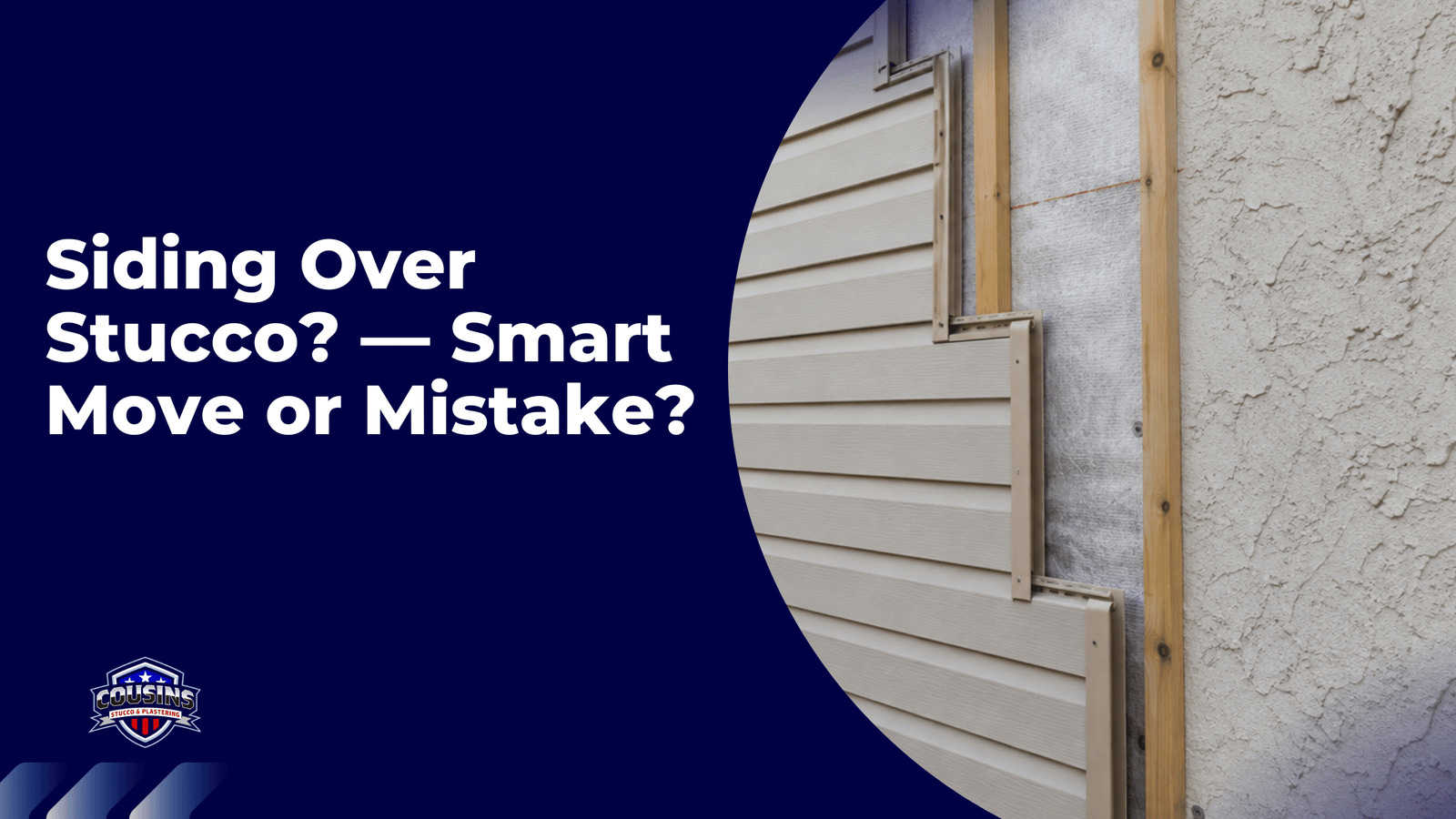
If you’re staring at a stucco exterior that’s cracked, dated, or just not what you want anymore, the idea of covering it with vinyl, fiber cement, or wood siding probably sounds appealing. It’s a common question — and the honest answer is: yes, you technically can. But whether you should is a completely different conversation.
Before you start planning a full re-siding project, you need to understand what’s actually happening beneath that stucco surface, what structural and moisture risks come with covering it, and what alternatives might serve your home far better in the long run.
Understanding What Stucco Actually Is
Stucco isn’t just a surface coating slapped on for aesthetics. A traditional 3 coat stucco system is a layered assembly bonded directly to the substrate beneath it. It starts with a scratch coat, followed by a brown coat, and finished with a top coat that’s either textured or smooth. Each layer serves a functional purpose.
One critical thing to know: traditional stucco does not have a drainage plane. Unlike some modern cladding systems, moisture that gets behind traditional stucco has nowhere to go. It stays trapped against the substrate — which is one of the primary reasons why stucco problems, when they occur, tend to become serious fast.
This is fundamentally different from EIFS (Exterior Insulation and Finish Systems), which does incorporate a vertical drainage plane, allowing water to exit the wall assembly. If your home has EIFS rather than traditional hard-coat stucco, the moisture risk profile changes — though complications still exist.
Knowing which system your home has matters enormously before you decide to cover anything.
So Can You Put Siding Over Stucco?
Physically? Yes. Contractors do it. Homeowners approve the work. It happens across the country. But here’s what that process actually involves — and where things can go wrong.
When siding is installed over existing stucco, installers typically need to:
- Assess the structural integrity of the existing stucco
- Fasten furring strips directly into the stucco and into the studs beneath
- Create a level plane for the new siding to attach to
- Account for window and door trim depth changes
- Ensure drainage and ventilation aren’t compromised by the added layers
The furring strip step is where things get complicated. Driving fasteners through stucco without proper technique can crack the surface. And if those cracks aren’t addressed — through proper stucco crack repair before the siding goes on — you’re sealing moisture pathways directly into your wall system.
Once siding goes over deteriorating stucco, whatever damage existed continues progressing. You just can’t see it anymore.
The Hidden Moisture Problem
This is the point most homeowners don’t fully think through until it’s too late.
When you cover stucco with siding, you’re adding layers to an exterior wall system that wasn’t originally designed for that configuration. If the stucco beneath was already experiencing moisture intrusion — even minor, hard-to-notice seepage around windows, at the base of walls, or along any penetrations — that problem doesn’t stop. It accelerates, sealed in by new cladding.
Remember: traditional stucco has no built-in drainage plane. Water that gets in stays in. Cover that with siding and you’ve now created a closed moisture environment between two cladding systems. Wood rot, mold, and structural damage to sheathing and framing can develop over years without any visible warning signs on the exterior.
This is why professional evaluation of your existing stucco is non-negotiable before any siding project begins. If there are existing cracks or damaged areas, those need professional stucco repair before any new cladding goes over the top. Not after. Before.
What Type of Siding Works Best Over Stucco?
Not all siding materials behave the same when installed over an existing stucco surface. Here’s a practical breakdown of the most common options homeowners consider:
| Siding Type | Weight Concern | Moisture Risk | Installation Complexity |
|---|---|---|---|
| Vinyl Siding | Low | Moderate | Moderate |
| Fiber Cement | High | Low (if sealed properly) | High |
| Wood Lap Siding | Moderate | High | High |
| Engineered Wood | Moderate | Moderate | Moderate |
| Metal Siding | Low | Low | Moderate |
Fiber cement, like James Hardie products, is popular for its durability and moisture resistance, but it’s also heavy. When you’re already dealing with the mass of an existing stucco layer, adding heavy fiber cement above it requires verified structural capacity and properly anchored furring strips that hit the studs reliably.
Vinyl is lighter and more forgiving in terms of installation, but it’s not foolproof. Improper installation over uneven stucco can result in waviness, gaps, and poor drainage behind the panels.
The bottom line: no siding material eliminates the underlying risk if the stucco beneath it is compromised.
When Covering Makes Sense vs. When It Doesn’t
There are scenarios where covering stucco with siding is a reasonable approach. And there are scenarios where it’s a mistake you’ll pay for later.
When it may be a viable option:
- The existing stucco is in genuinely good structural condition — no active cracks, no moisture damage, no delamination
- The stucco is cosmetically outdated but otherwise sound
- The homeowner has had a professional assessment confirming the substrate is stable
- Proper furring strips will be used to create a drainage gap behind the new siding
When covering is a poor choice:
- There are visible or suspected cracks in the stucco (especially diagonal or stair-step cracks near corners)
- There’s any history of water intrusion or interior moisture problems
- The stucco feels hollow or sounds different when tapped (indicating delamination)
- The home is in a region with significant freeze-thaw cycles or high humidity
- The stucco hasn’t been inspected in years and its condition is unknown
If you’re in that second category — or even unsure — the smarter move is to deal with the stucco first. That might mean repairing specific problem areas rather than tackling a full replacement.
The Case for Stucco Repair Instead
A lot of homeowners pivot toward siding because they assume their stucco problems are unfixable or too expensive to address. That’s not always true.
Many stucco issues are localized. A section of cracked or damaged stucco doesn’t necessarily mean the entire exterior needs to go. Targeted stucco repair can address problem areas effectively, restoring the wall’s integrity without the complexity, structural considerations, and long-term risk that comes with covering the entire system.
For crack-specific issues, the professional repair process involves crack chasing to open and clean the damaged area, followed by sealant application, and then stucco matching to restore the surface texture and appearance. When done correctly, repaired cracks are virtually invisible and structurally sound.
This approach is often more practical, less disruptive, and better for the long-term performance of your exterior than layering new materials over an unresolved problem.
What About Stucco Finish Options If You Decide to Stay with Stucco?
If your stucco evaluation comes back showing the underlying system is sound, you might find yourself reconsidering the full re-siding route entirely. Stucco is actually a highly versatile exterior system with more aesthetic range than most people realize.
A smooth finish, for example, is achieved through a steel troweling process that creates a sleek, contemporary look that’s increasingly popular in modern home design. Float finishes create a different texture and also accept integral color — meaning pigment blended directly into the mix rather than applied as a top coat. Both smooth and float finishes work well with integral color, giving you a range of tones and aesthetic directions without repainting every few years.
If the problem was always cosmetic rather than structural, a stucco refinish or color update might solve what you were originally trying to fix with siding.
Permits, Codes, and What Your HOA Might Say
One factor homeowners often overlook: you can’t just put siding over stucco without checking local building codes first.
Most jurisdictions in the U.S. require permits for exterior cladding changes. Depending on your area, adding a second cladding layer over stucco might trigger requirements for inspections, fire rating compliance, or structural assessments. In some cases, local codes outright prohibit double-cladding without specific provisions.
If you live in a homeowner’s association community, there’s a separate layer of approval required. Many HOAs in regions where stucco is common — the Southwest, Florida, parts of the Southeast — have strict guidelines about exterior material changes. Switching from stucco to vinyl siding, for example, might not be approved regardless of your personal preference.
Check both before you spend money on contractor bids.
Finding the Right Contractor for the Job
Whether you decide to repair your stucco or move forward with siding installation over it, the quality of the contractor matters more than almost any other factor.
For siding installation over stucco, look for contractors who have specific experience with this type of project — not just general siding installers. They need to understand how stucco behaves as a substrate, how to properly anchor furring strips into framing, and how to address the transition zones around windows and doors where water infiltration risk is highest.
For stucco repair, work with a specialist who understands the 3 coat stucco system and the importance of proper texture matching. A patch that doesn’t match in texture or color stands out permanently and doesn’t always bond properly with surrounding material when done by someone unfamiliar with the process.
If you’re in a region where Cousins Stucco operates, reaching out for a professional assessment before you commit to any exterior decision is always the right call. You can contact the team here to get started.
Key Questions to Ask Before You Decide
Before calling a contractor, run through these questions honestly:
- Has your stucco been professionally inspected recently?
- Are there any existing cracks — even small or hairline ones?
- Have you noticed any interior moisture, efflorescence, or peeling paint on interior walls?
- Is the stucco hollow-sounding in any sections?
- Is your primary goal cosmetic or functional?
- Have you confirmed your local codes allow double-cladding?
If you answered “no” to most of the first group and “cosmetic” to the goal question, covering with siding becomes a more defensible option. If cracks, moisture, or hollow sections are part of the picture, handle those through proper stucco crack repair first — no exceptions.
Conclusion
The short answer to whether you can put siding over stucco is yes. The more important answer is that you shouldn’t do it without fully understanding the condition of the stucco underneath. Covering a deteriorating stucco exterior with siding doesn’t fix the underlying problems — it conceals them, often accelerating damage in the process.
For many homeowners, targeted stucco repair is a smarter, more cost-effective solution than a complete re-siding project. For others, once the stucco is confirmed to be in good condition, installing siding over it can be a viable path forward. The difference between a successful project and an expensive mistake comes down to one thing: getting a professional assessment before committing to either route.
Frequently Asked Questions
Is it structurally safe to put siding over existing stucco?
It can be, provided the stucco is in solid condition with no cracks, delamination, or moisture damage. Furring strips must be properly fastened into the wall framing — not just into the stucco itself — and the installation must allow for adequate drainage behind the new siding layer.
Will putting siding over stucco cause moisture problems?
It can, particularly if the stucco has any existing damage or if the installation doesn’t include a proper drainage gap. Traditional stucco has no built-in drainage plane, so any moisture that gets trapped between the stucco and the new siding has nowhere to go. This can lead to rot and mold over time.
Do I need a permit to put siding over stucco?
In most U.S. jurisdictions, yes. Exterior cladding changes typically require a building permit, and some local codes have specific requirements or restrictions around double-cladding. Always check with your local building department before starting the project.
How do I know if my stucco is in good enough condition to cover?
A professional stucco inspection is the most reliable method. Signs of poor condition include visible cracking (especially diagonal or stair-step patterns), a hollow sound when tapped, surface delamination, staining from moisture, or any interior signs of water intrusion.
What’s the alternative to putting siding over damaged stucco?
Professional stucco repair is often the better solution. Problem areas can be addressed through crack chasing, sealant application, and stucco matching, restoring the wall’s integrity without the risks that come with covering a damaged system. For homes with only cosmetic issues, a refinish or new finish texture may be all that’s needed.