Key Takeaways:
- Yes, you can stucco over brick — but preparation and the right system are everything.
- A proper 3 coat stucco system applied correctly to brick creates a durable, attractive finish that lasts decades.
- Skipping steps like surface prep or using the wrong bonding method is the most common reason stucco over brick fails.
Brick is one of the most durable building materials around, but there comes a time when homeowners and property managers want something different. Maybe the mortar joints have started to show their age. Maybe the aesthetic just doesn’t fit anymore. Whatever the reason, the question comes up constantly: can you actually stucco over brick?
The short answer is yes — with the right preparation and the right system, applying stucco over brick is absolutely doable and can produce a clean, long-lasting result. But the process is more nuanced than slapping a coat of material on a wall and calling it a day. Understanding what makes it work — and what makes it fail — will save you significant headaches down the road.
Why Homeowners Choose Stucco Over Brick
Brick has texture, mortar joints, and variations in surface porosity that create real challenges for any coating system. So why do people go this route?
A few common motivations:
- Aesthetic refresh — Stucco gives a clean, modern, or Mediterranean look that brick simply can’t achieve.
- Uniformity — Stucco covers inconsistent brick colors, patched sections, and mismatched mortar repairs.
- Surface protection — When applied correctly, stucco adds a protective shell over aging or spalling brick.
- Increased curb appeal and property value — The visual transformation is often dramatic.
None of these goals are unrealistic. But achieving them requires understanding the material science at play and the system being used.
The Core Challenge: Brick Is Not an Ideal Substrate by Default
Brick is dense, non-uniform, and has a surface that can either bond too loosely or trap moisture in unpredictable ways. The mortar joints create valleys, while the brick faces sit higher — that variation in texture and porosity means adhesion won’t be consistent unless you take deliberate steps to prepare the surface first.
This is why application method matters so much. There are two primary approaches to stuccoing over brick:
Direct Bond Application
In a direct bond scenario, stucco is applied directly to the brick without any wire lath or metal reinforcement. This approach only works reliably when the brick surface is clean, structurally sound, and porous enough to accept the scratch coat. Any brick that is painted, sealed, or glazed is not a candidate for direct bond — those surfaces simply won’t hold.
Wire Lath Application
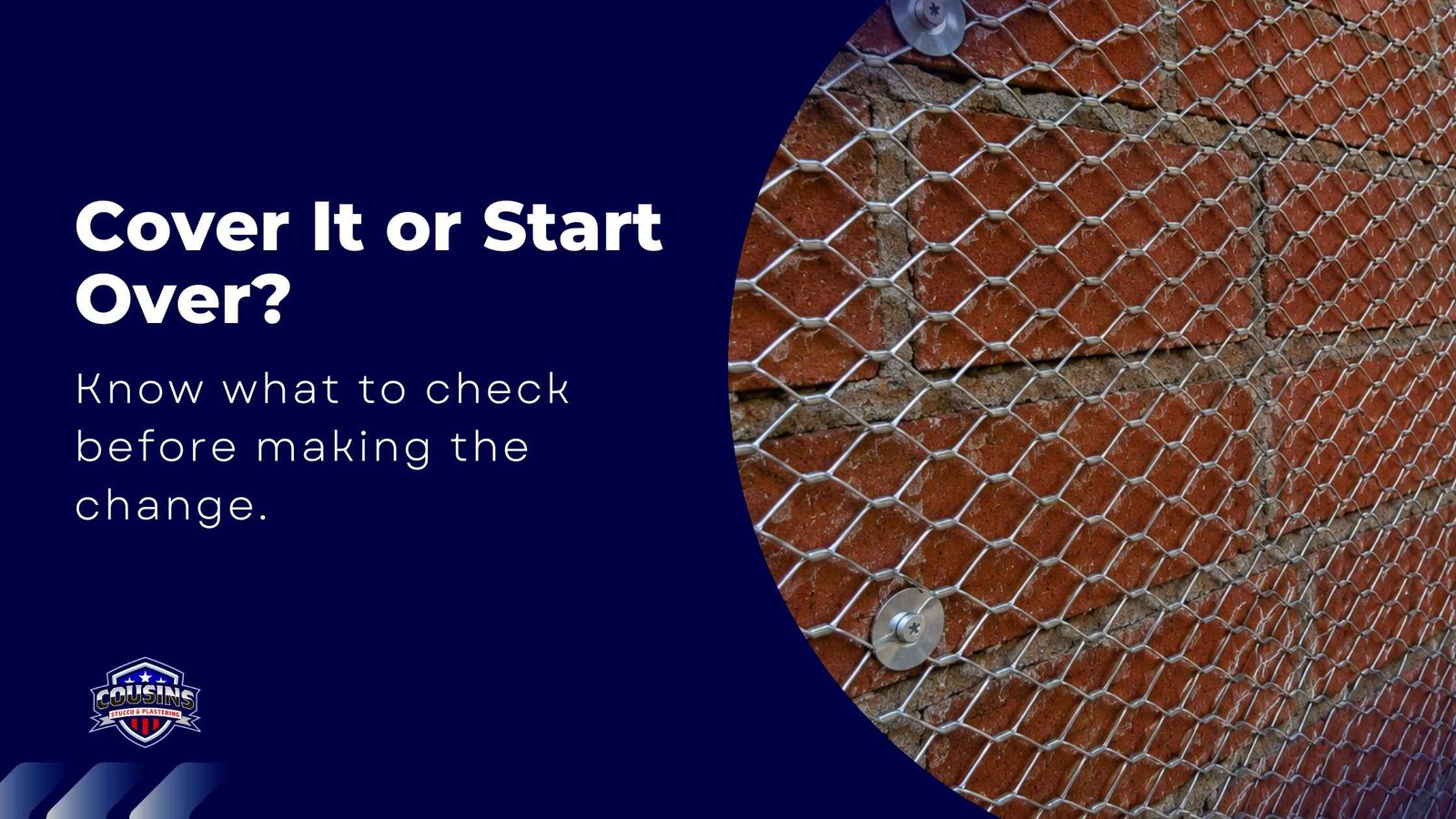
The more reliable method — and often the recommended one — is to install metal wire lath over the brick before applying stucco. The lath gives the scratch coat something mechanical to grip. This is the approach used when the brick surface has been painted, is too smooth, or when there’s any question about long-term adhesion. Fiber mesh is incorporated during this process, as it is only appropriate for use over wire lath and provides added crack resistance within the stucco layers.
The 3 Coat Stucco System Explained
When professionals stucco over brick, they’re not applying a single thick layer and hoping for the best. A proper 3 coat stucco system is the industry-standard approach — and for good reason.
Here’s how the system breaks down:
1. The Scratch Coat
This is the first coat applied to the prepared brick surface or over the wire lath. It’s called the “scratch coat” because it gets scratched horizontally with a rake-style tool before it cures. Those scratches create mechanical keys that the second coat locks into. This layer establishes the bond and the base.
2. The Brown Coat
The second coat — the brown coat — is applied after the scratch coat has cured adequately. This layer builds out the thickness and begins to level the wall surface. It fills in irregularities caused by the brick texture and mortar joint variations. This coat is critical for achieving a flat, even plane.
3. The Finish Coat
The final coat is where aesthetics come into play. This layer is what the eye sees when the job is done. Finish options vary widely, and this is where texture and color decisions get made. Two of the most popular options:
- Smooth finish — Achieved through steel troweling, this produces a flat, polished surface with a clean, modern look.
- Float finish — Created by working the surface with a sponge float, this produces subtle texture with a softer, more traditional appearance.
Integral color can be mixed directly into the finish coat for both smooth and float finishes, eliminating the need to paint afterward and ensuring the color runs through the material itself rather than sitting on top.
One important structural note: traditional stucco systems do not include a drainage plane. The material is applied as a solid system bonded to the wall. This is a key distinction from EIFS (Exterior Insulation and Finish Systems), which is a layered panel system that does incorporate a vertical drainage plane built into its assembly. These are fundamentally different products and should never be confused.
Surface Preparation: The Step That Determines Everything
No matter which application method is used, surface preparation is where projects are won or lost. Applying stucco to poorly prepared brick is one of the most reliable ways to guarantee adhesion failure, cracking, and costly repairs.
Here’s what proper prep looks like:
- Inspection — Examine the brick for loose, crumbling, or spalling sections. Any brick or mortar that isn’t structurally sound must be addressed before any stucco goes on.
- Cleaning — The surface must be free of dirt, oil, algae, mold, and any efflorescence. Pressure washing is commonly used, followed by adequate drying time.
- Paint removal — If the brick has been painted, that paint must be removed or wire lath must be used to bypass the adhesion problem entirely.
- Dampening — Before the scratch coat is applied in a direct bond scenario, the brick should be dampened to prevent it from drawing moisture out of the stucco too quickly, which causes the material to dry unevenly and weakens the bond.
Skipping any of these steps isn’t a shortcut — it’s a guarantee of future problems.
What Happens When Stucco Over Brick Is Done Wrong
Poorly executed stucco jobs over brick tend to fail in predictable ways. Knowing what to watch for helps you evaluate existing work or understand what a future repair situation might look like.
Delamination — When the stucco separates from the brick and pulls away from the wall. This happens when the surface wasn’t properly prepared, the bond coat was inadequate, or moisture got trapped between layers.
Cracking — Some hairline cracking in stucco is normal as it cures. But significant cracking — especially around windows, doors, or corners — often points to poor brown coat application, inadequate cure time between coats, or improper mix ratios.
Moisture intrusion — When cracks aren’t addressed promptly, water finds a way in. From there, damage can work its way back to the brick substrate and eventually into the wall assembly.
If you’re dealing with existing stucco over brick that has cracked or failed, the repair process typically involves crack chasing to open the damaged area, followed by sealant application, then stucco matching to bring the surface back to a consistent appearance. Matching texture and color is a skilled trade — it’s not a DIY-friendly task on finished surfaces.
For existing damage on your exterior, you can learn more about stucco repair options and what a professional assessment looks like.
Finish Options and What They Actually Look Like
One of the biggest upsides to stuccoing over brick is the range of finish choices available. You’re not locked into a single look.
| Finish Type | Application Method | Texture Level | Color Options |
|---|---|---|---|
| Smooth | Steel trowel | Flat, polished | Integral color available |
| Float | Sponge float | Light to medium | Integral color available |
| Sand | Rubber float | Fine granular | Paint or integral color |
| Dash | Sprayed or hand-thrown | Heavy, irregular | Paint or integral color |
The smooth and float finishes are the most commonly requested for residential stucco over brick projects. Both accept integral color, which is worth understanding — integral color is mixed into the base material itself, so the color stays consistent even if the surface is nicked or scratched over time. It also eliminates the ongoing maintenance cycle of repainting.
Common Questions Before Committing to the Project
Does stucco over brick add significant thickness to the wall?
Yes. A 3 coat stucco system adds roughly 3/4 inch to 1 inch of thickness to the wall. Around windows and doors, this is something to account for — trim, window sills, and other transition points may need adjustment.
Is it reversible?
Not easily. Once stucco is bonded to brick — especially through a wire lath system — removing it is labor-intensive. This is a long-term decision, not a temporary change.
What about existing cracks in the brick before stuccoing?
Active cracks in the brick or mortar need to be addressed first. Covering structural movement with stucco won’t stop that movement — it’ll just transfer the cracking into the finish coat. For stucco crack repair on an existing stucco surface, the process is different than prepping new brick, but the principle is the same: resolve the underlying issue before addressing the surface.
Will stucco work on all types of brick?
Most standard clay brick is compatible. However, glazed brick, engineered thin brick, and some manufactured brick veneers require closer evaluation. When in doubt, get a professional opinion before committing.
When to Call a Professional
Stuccoing over brick is not a straightforward weekend project. The material mixing ratios, coat timing, surface preparation, and finishing techniques require experience to execute well. Even experienced DIYers often underestimate the complexity once they get into it.
Signs you need a professional:
- The brick surface is uneven, spalling, or has significant mortar joint deterioration
- The existing brick is painted and you want a long-term result
- You’re working on a large exterior surface area
- You want a specific finish — especially smooth — that requires skilled trowel work
- There are existing stucco sections adjacent to the brick that need to blend seamlessly
If you’re evaluating your project and want professional input, contact Cousins Stucco to discuss your specific situation before committing to an approach.
Conclusion
Stuccoing over brick is entirely possible — and when done right, the results are genuinely impressive. The key variables are surface preparation, the right application method for your specific brick substrate, and a proper 3 coat stucco system executed with the right timing between layers. Rushing any of those stages is where projects go sideways.
The finish coat is where your vision comes to life — whether that’s a steel-troweled smooth surface, a textured float finish, or something with more character. Integral color options mean you’re not stuck with a painted exterior that needs constant maintenance. And the durability of a professionally applied stucco system means you’re looking at decades of performance when the job is done correctly.
If your brick exterior has seen better days — or you simply want a different look — stucco is worth serious consideration. Just make sure the preparation gets the attention it deserves before the first coat ever touches the wall.
Frequently Asked Questions
Can you apply stucco directly to brick without wire lath?
Yes, in certain conditions. If the brick is clean, unpainted, structurally sound, and sufficiently porous, a direct bond application can work. However, if there’s any doubt about adhesion — especially with painted or glazed brick — wire lath should be installed first to provide a mechanical bond for the scratch coat.
How many coats of stucco are needed over brick?
A proper application uses a 3 coat stucco system: the scratch coat, the brown coat, and the finish coat. Each layer serves a distinct purpose and must be allowed to cure appropriately before the next is applied. Skipping coats compromises both the bond and the finished appearance.
Will stucco over brick crack?
Some minor hairline cracking during the cure process is normal. Significant cracking usually points to preparation issues, movement in the substrate, or improper application. Cracks should be addressed promptly — the repair process involves crack chasing, sealant, and stucco matching to restore the surface.
How do you match stucco texture over brick if repairs are needed later?
Matching stucco texture and color is a skilled process. The standard repair method involves crack chasing to open the damaged area, applying sealant, and then applying a stucco match coat with the appropriate texture technique. Professionals with experience in stucco repair can achieve results that blend seamlessly with the original finish.
What is the best finish for stucco over brick on a residential home?
It depends on the architectural style and personal preference. Smooth finishes are popular for modern and contemporary homes and are achieved through steel troweling. Float finishes offer a softer texture that suits traditional and Mediterranean styles. Both accept integral color, which provides consistent, low-maintenance color throughout the material rather than just on the surface.