
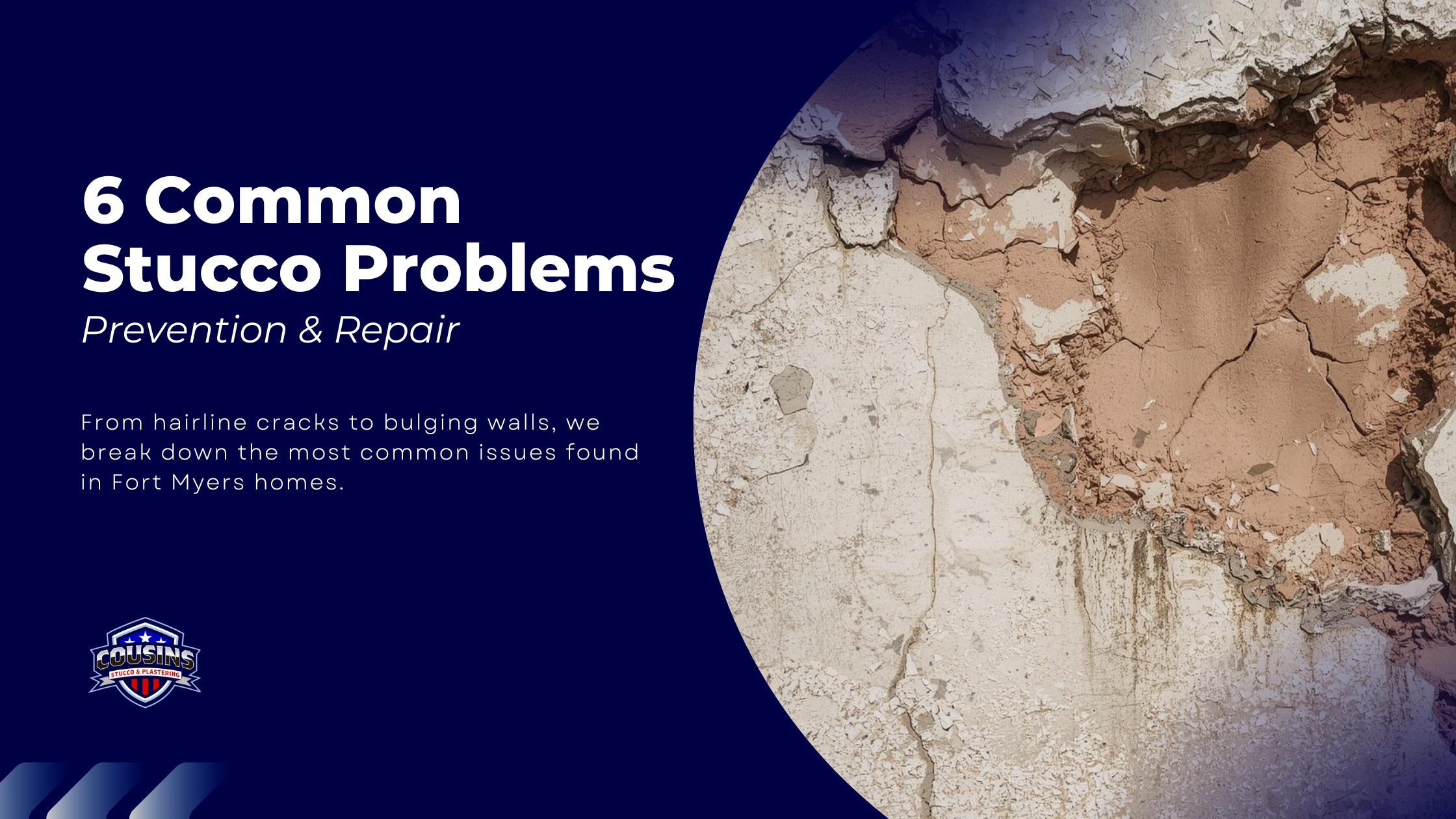
Fort Myers is famous for its stunning Mediterranean-style architecture, defined by the clean, timeless look of stucco. However, the very thing that makes our homes beautiful—our tropical climate—is also the primary cause of exterior degradation. Between the blistering Southwest Florida sun and the intense humidity of the rainy season, stucco in Lee County faces challenges that “mainland” builders often fail to anticipate.
At Cousins Stucco, we have inspected thousands of homes from McGregor Blvd to The Forum. We have identified seven recurring problems that plague Fort Myers properties. Understanding these issues early is the key to preventing a small patch job from turning into a full-scale structural remediation.
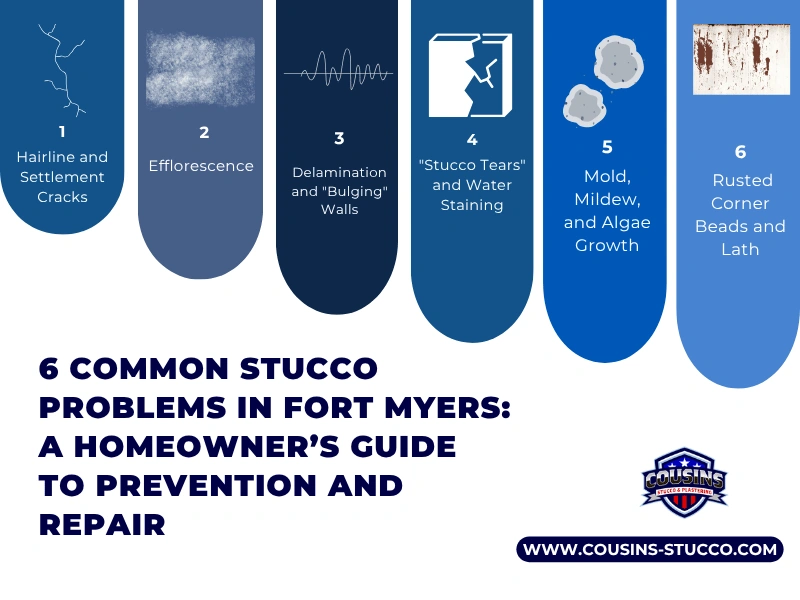
1. 6 Common Stucco Problems in Fort Myers: The #1 Homeowner’s Guide
Perhaps the most common sight in neighborhoods like Gateway or Plantation is the “spiderweb” or hairline crack.
- The Cause: Florida’s sandy soil is prone to shifting. As a house settles into its foundation, the rigid stucco shell cannot flex, leading to cracks. Additionally, if the stucco was applied too quickly or during a particularly hot afternoon without proper curing, “shrinkage cracks” appear.
- The Risk: While they look cosmetic, these cracks act as straws, “wicking” moisture directly into the wall cavity every time a thunderstorm hits.
2. Efflorescence (White Powdery Staining)
Have you noticed a white, chalky substance forming on your stucco walls? This is called efflorescence.
- The Cause: This happens when water moves through the stucco and dissolves mineral salts within the masonry. As the water evaporates on the surface, it leaves the salt behind.
- The Fort Myers Connection: In our high-humidity environment, stucco often stays “damp,” allowing this salt migration to continue for months. It is often a sign that your stucco was not properly sealed or that there is an internal leak.
3. Delamination and “Bulging” Walls
If your stucco feels “hollow” when you tap on it, or if you see sections that look like they are pulling away from the house, you are dealing with delamination.
- The Cause: This occurs when the stucco bond fails, separating from the lath (the metal mesh) or the substrate. It is usually caused by long-term water intrusion that has rusted the metal frame behind the finish.
- The Risk: This is a major safety concern. Large chunks of stucco can fall off without warning, exposing your home’s wooden “bones” to rot and termites.
4. “Stucco Tears” and Water Staining
In Fort Myers, we frequently see dark, vertical streaks running down from the corners of windows or where the roof meets the wall. These are affectionately (or not so affectionately) known as “stucco tears.”
- The Cause: This is a clear indicator of a flashing failure. If the metal transitions around your windows or rooflines aren’t perfectly sealed, water “bleeds” out from behind the stucco, carrying dirt and minerals with it.
- The Solution: Cleaning the stains is a temporary fix. To solve this, a professional must inspect the window seals and kick-out flashing to stop the water at its source.
5. Mold, Mildew, and Algae Growth
Because Fort Myers experiences nearly 55 inches of rain per year, the “shady” side of your home can quickly turn green or black.
- The Cause: Stucco is a porous, masonry product. It holds moisture, which provides the perfect breeding ground for organic growth.
- The Danger: Beyond the “curb appeal” hit, mold and mildew can eventually eat through the paint layer and begin to degrade the stucco itself.
6. Rusted Corner Beads and Lath
Many older homes in the Historic District or near the Caloosahatchee River were built using galvanized steel corner beads.
- The Problem: Over time, the salty Florida air causes this steel to oxidize (rust). As metal rusts, it expands significantly.
- The Result: This expansion “blows out” the corners of your stucco, leading to vertical cracks along the edges of your home. At Cousins Stucco, we replace these with vinyl or stainless steel components that can never rust.
Why “Local” Knowledge is the Only Solution
Fort Myers has a unique “micro-climate.” A contractor from a drier state might suggest a simple patch, but a local expert knows that in Lee County, we have to build for Hurricane Readiness.
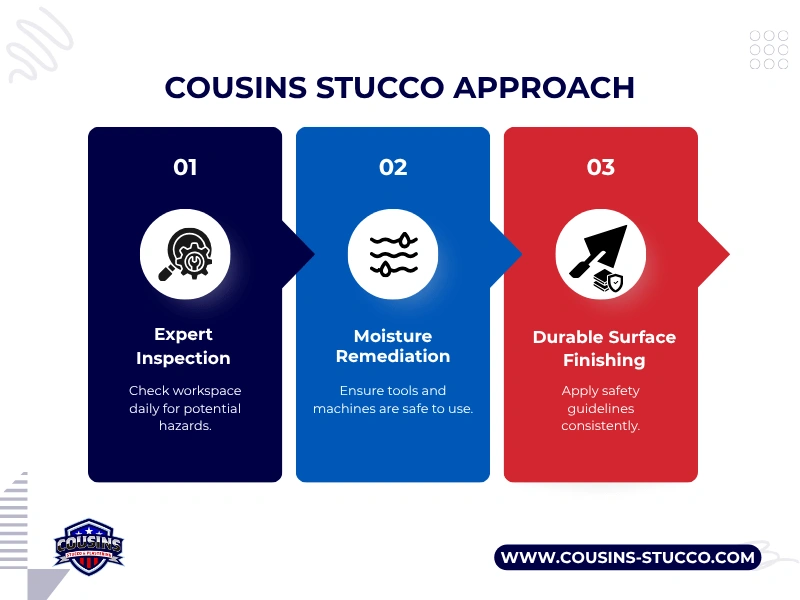
The Cousins Stucco Approach
When we tackle these common problems, we don’t just “cover the crack.” We use a three-step process:
- Expert Inspection: We conduct a thorough physical and visual diagnostic of your exterior to identify exactly where the structural envelope is failing before we ever break ground.
- Moisture Remediation: We fix the source of the leak—whether it’s a failed window seal or a roof transition—to ensure the repair lasts.
- Durable Surface Finishing: We apply high-quality, weather-resistant masonry finishes and sealants designed to withstand Florida’s intense humidity and UV exposure.
Conclusion: Don’t Let Small Problems Become Big Ones
If you live in Whiskey Creek, Botanica Lakes, or anywhere in the Fort Myers area, your stucco is your first line of defense against the elements. If you notice any of these seven “red flags,” the time to act is now.
At Cousins Stucco, we pride ourselves on being the most trusted name in Lee County for stucco health. We live here, we work here, and we know exactly how to make your home “Florida Proof.”