Key Takeaways:
- Fort Myers’ humid, salt-air climate demands specific stucco mixes and application techniques that differ from interior U.S. markets.
- Hiring a licensed, experienced stucco contractor in Fort Myers isn’t just smart — it’s the difference between a 30-year finish and a 3-year headache.
- Understanding the full installation process helps you ask better questions, avoid low-ball bids, and protect your investment long-term.
Why Fort Myers Is a Unique Beast for Stucco Work
Fort Myers isn’t Phoenix. It isn’t Atlanta. It’s a coastal Southwest Florida city where the air carries salt, the summers bring relentless humidity, and afternoon thunderstorms arrive with the reliability of a morning alarm clock. If you’re planning stucco installation on your home or commercial property here, that environmental context matters — a lot.
Stucco is one of the most popular exterior finishes in Southwest Florida, and for good reason. Done right, it’s durable, energy-efficient, pest-resistant, and genuinely beautiful. Done wrong — rushed application, wrong mix ratios, skipped curing time — and you’re looking at cracks, moisture intrusion, and mold problems that’ll make your wallet cry.
This guide breaks down everything you need to know about fort myers stucco installation: the process, the materials, the costs, what to watch out for, and how to make sure the job is done right the first time.
The Three-Coat Stucco System: What It Actually Involves
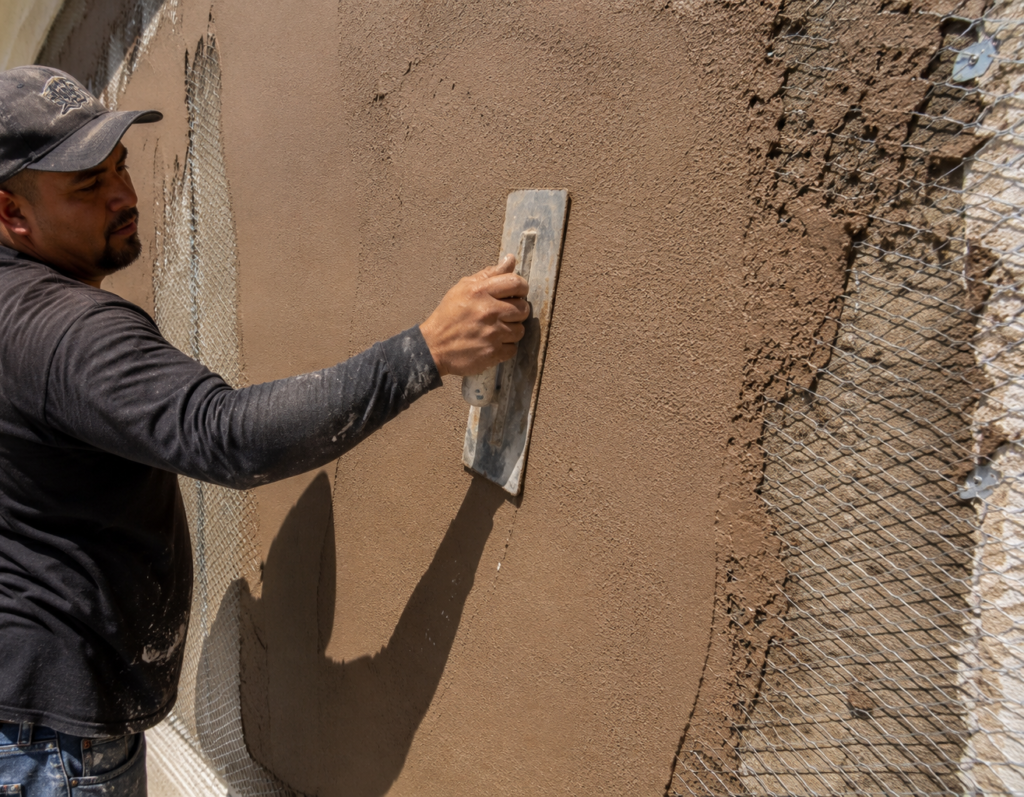
Most quality stucco installations in Fort Myers use the traditional three-coat system. It sounds simple. It isn’t. Each layer serves a distinct structural and protective function, and shortcuts at any stage compromise the whole.
The Scratch Coat
This is your foundation layer. Applied directly over metal lath (a wire mesh fastened to your wall sheathing), the scratch coat is roughly ⅜ inch thick. It gets “scratched” — literally scored with a tool — while still wet, creating mechanical grip for the next layer. This coat has to cure properly before anything goes on top of it. In Fort Myers’ heat and humidity, monitoring that cure window is critical.
The Brown Coat
The second layer, also about ⅜ inch thick, smooths and levels the surface. Contractors float this coat to achieve a flat, even plane. Rushing the brown coat is one of the most common mistakes seen in budget installations. If it’s not properly cured and floated, the finish coat will show every imperfection — and trust us, in direct Florida sunlight, you’ll see them all.
The Finish Coat
This is the visible layer — the one your neighbors and HOA actually see. It can be applied in a range of textures: smooth, sand, dash, lace, or the ever-popular skip-trowel that’s common throughout Lee County. Color can be integral (mixed directly into the stucco) or added with paint after curing. Integral color is generally preferred in coastal climates because it doesn’t fade or peel like surface-applied paint.
One-Coat vs. Three-Coat: Which Should You Choose in Fort Myers?
The market offers synthetic one-coat stucco systems, and contractors will pitch them. Here’s the honest breakdown:
| Feature | Traditional Three-Coat | One-Coat Synthetic |
| Durability | 30–50+ years with maintenance | 15–25 years typically |
| Moisture resistance | Excellent when properly applied | Variable, depends heavily on brand |
| Cost | Higher upfront | Lower upfront |
| Application time | Longer (requires cure time between coats) | Faster |
| Best for FL climate | Yes, especially coastal areas | Conditional — check product specs |
| Crack flexibility | Less flexible | More flexible (elastomeric blends) |
For most Fort Myers homeowners — especially those within a few miles of the coast — the three-coat system is still the gold standard. The one-coat synthetic systems have improved dramatically, and some high-quality elastomeric versions perform well in high-humidity environments, but they require experienced application and premium products to deliver comparable longevity.
What Quality Stucco Installation Looks Like: The Process Step by Step
If you’re hiring a contractor, you should know what proper installation actually looks like from day one to completion. Here’s the sequence:
- Surface preparation — Old coatings, loose material, and contaminants are removed. Any existing damage to the substrate is addressed before a single bucket of stucco is mixed.
- Water-resistive barrier (WRB) installation — A house wrap or building paper is installed over the sheathing to create a moisture drainage plane. In Florida, skipping this step isn’t just bad practice — it’s asking for structural rot.
- Metal lath fastening — Galvanized or stainless steel lath is mechanically fastened to studs or masonry, overlapping seams properly.
- Scratch coat application and scoring — First coat goes on, gets raked, and cures (typically 48–72 hours minimum in Florida conditions).
- Brown coat application and floating — Second coat is applied, leveled, and cured again (at least 7 days before finish coat in most professional specs).
- Finish coat application — The texture and color are applied. Consistent technique across the entire surface matters here — inconsistent pressure or tool marks will show.
- Curing and sealing — The finish coat requires careful curing. Direct sun or wind can dry it too fast, causing shrinkage cracks. Misting and shading may be necessary.
- Final inspection and sealant application — Control joints, penetrations (windows, doors, utility entries), and transitions should be sealed with a compatible, flexible sealant.
If your contractor skips or rushes any of these steps, you’ll see it. Sometimes within months.
Materials Matter More Than You Think in Southwest Florida
Not all stucco mixes are created equal, and what works perfectly in Nevada is a different animal here. The salt air in Fort Myers accelerates corrosion of fasteners and lath. The UV intensity fades finishes faster. The humidity can interfere with curing.
Specify galvanized or stainless steel lath — not the cheap stuff. Ask about the Portland cement mix ratios being used. Request that the contractor use products rated for coastal, high-humidity environments. Brands like Quikrete, BASF, and Dryvit offer product lines specifically formulated for Florida climate conditions.
Also, talk about control joints. These are intentional breaks in the stucco surface that allow for thermal movement without cracking. In Fort Myers, where temperatures swing dramatically between seasons and between morning and afternoon, properly spaced control joints are non-negotiable.
How Much Does Stucco Installation Cost in Fort Myers?
Pricing varies depending on your home’s size, substrate condition, texture selection, and whether you’re doing a full re-stucco or new construction. Here’s a general cost framework:
| Scope | Estimated Cost Range |
| New stucco installation (per sq ft) | $15 – $30 per sq ft |
| One-coat synthetic system | $12,000 – $21,000 |
| Color finish upgrade (integral pigment) | $10 – $20 per sq ft |
| Three-coat system on average home (1,500 sq ft exterior) | +$1 – $3 per sq ft |
| Prep work / substrate repair | Variable — $500 to $5,000+ |
These are ballpark numbers for the Fort Myers market. Always get three quotes. Any quote that comes in dramatically lower than the others warrants hard questions about material quality, crew experience, and whether they’re licensed and insured in Florida.
And while we’re on the topic — if you’ve got existing stucco that’s cracking, staining, or showing signs of moisture damage, addressing those issues before installing over them is essential. Stucco repair in Fort Myers should always precede any new installation work on existing structures, because covering a problem doesn’t make it disappear — it just makes it more expensive to fix later.
Red Flags to Watch for When Hiring a Fort Myers Stucco Contractor
You’ve got options in this market. Not all of them are good. Before signing anything, watch for these warning signs:
- No Florida contractor’s license — Stucco application over $2,500 in Florida legally requires a licensed contractor. Verify any license on the Florida DBPR website before hiring.
- No liability insurance or workers’ comp — If someone falls off your roof uninsured, the liability exposure lands on you. Ask for certificates of insurance before work starts.
- Pressure to skip the brown coat cure time — This is one of the most common shortcuts taken on rushed jobs. A reputable contractor builds cure time into the schedule.
- Vague or verbal-only quotes — Everything should be in writing: materials specified, number of coats, warranty terms, and payment schedule.
- No mention of a water-resistive barrier — If a contractor doesn’t bring this up on a frame-construction home, that’s a major red flag.
- Unusually low bids — If one quote is 40% below the others, ask why. The answer usually involves thinner coats, cheaper materials, or an unlicensed crew.
Stucco Textures Popular in Fort Myers
The finish texture you choose affects curb appeal, maintenance, and how visible future repairs will be. Here are the most common options you’ll see throughout Lee County:
- Skip Trowel — Casual, irregular texture applied in patches with a trowel. Very popular in Florida residential construction. Easier to touch up after repairs than some other textures.
- Sand/Float Finish — Uniform fine-grit texture, smooth but not slick. Classic look, works well on contemporary and Mediterranean-style homes.
- Dash Finish — Rougher, aggregate-heavy texture applied by throwing or spraying. Very durable and good at hiding minor imperfections over time.
- Smooth/Level 5 — The most demanding to apply correctly and the most unforgiving of any substrate imperfections. Stunning when done well.
- Lace Texture — Heavily variegated, high-contrast surface. Popular on Spanish and Mediterranean Revival architecture common throughout Fort Myers neighborhoods.
Choosing a texture isn’t just aesthetic — if you ever need professional stucco repair in Fort Myers, matching an unusual or highly custom texture becomes significantly more complex and costly than matching a common finish.
Permits and Code Compliance in Fort Myers
Fort Myers and Lee County have specific building code requirements for exterior stucco work, especially on projects involving re-stucco or new construction. For significant work, you may need a permit from Lee County Building Department.
Permit requirements typically apply when:
- You’re removing and replacing existing stucco on a large portion of the exterior
- Work involves structural changes to the substrate or wall assembly
- The project is on a commercial property
Your contractor should handle permit pulling — and if they suggest you skip the permit to save money, walk away. Unpermitted work creates serious complications during home sales and insurance claims, particularly after hurricane-related damage.
Maintaining Your Stucco After Installation
Stucco is low-maintenance — not no-maintenance. Here’s what keeps it performing for decades in the Fort Myers environment:
- Annual inspection — Walk the perimeter once a year and look for hairline cracks, especially around window and door frames, and at control joints.
- Prompt crack repair — Small hairline cracks are normal and can be sealed with a compatible elastomeric caulk. Larger cracks (wider than 1/16 inch) should be evaluated by a professional for underlying moisture damage before sealing.
- Gentle cleaning — Use a garden hose and soft brush to remove mildew and salt deposits. Avoid high-pressure washing that can damage the finish coat.
- Sealant refresh — Window and door perimeter sealants typically need refreshing every 5–10 years in Florida’s UV-intense climate.
- Watch for efflorescence — White, chalky deposits on the surface indicate moisture movement through the stucco. It’s not always serious, but it warrants investigation.
If you’re noticing recurring cracks or moisture staining, don’t wait on it. Getting expert stucco repair handled in Fort Myers early is infinitely cheaper than dealing with rot, mold, or full re-stucco down the road.
—
Conclusion
Fort Myers stucco installation is genuinely one of the smartest investments you can make in your home’s exterior — when it’s done right. The climate here is gorgeous and brutal in equal measure, and your home’s finish coat is the first line of defense against it. Understanding the three-coat process, specifying the right materials for coastal conditions, hiring a licensed contractor, and maintaining the finish over time turns stucco from a commodity into a 30-plus-year asset.
Don’t let a low bid talk you into a shortcut. Don’t let an eager sales pitch skip over the cure times. Ask the right questions, know what proper installation looks like, and your stucco will look great and perform flawlessly for decades.
—
Frequently Asked Questions About Fort Myers Stucco Installation
How long does stucco installation take in Fort Myers?
A full three-coat stucco installation on an average single-family home typically takes 7–14 days, depending on the size of the home and required cure times between coats. Rushing cure time is a common shortcut — a reputable contractor builds it into the schedule rather than compressing it.
Does Fort Myers’ humidity affect stucco curing?
Yes. High humidity slows the evaporation of moisture from each coat, which actually helps prevent premature drying and cracking — but it also extends required cure windows. Experienced local contractors know how to read conditions and adjust their timing accordingly.
Can I paint over stucco after installation?
Yes, but new stucco needs to fully cure first — typically 28 days minimum. Applying paint too early traps moisture and causes peeling. Many homeowners in Fort Myers opt for integral color in the finish coat specifically to avoid the repainting cycle.
How do I know if my existing stucco needs repair before re-coating?
Look for cracks wider than a hairline, soft or hollow-sounding areas when tapped, staining or discoloration around window frames, and any visible separation from the substrate. A professional evaluation before any re-coat is always worth the hour it takes — and you can get a stucco repair assessment in Fort Myers to know exactly what you’re working with.
What’s the best stucco finish texture for a Fort Myers home?
Skip trowel and sand/float finishes are the most popular in Southwest Florida for good reason — they’re durable, widely understood by local contractors, and relatively easy to match during future repairs. Smooth finishes look stunning but require more skill and are harder to repair invisibly.
—
Ready to get your stucco installation done right the first time? Work with a contractor who knows Fort Myers — the climate, the codes, and the craft.