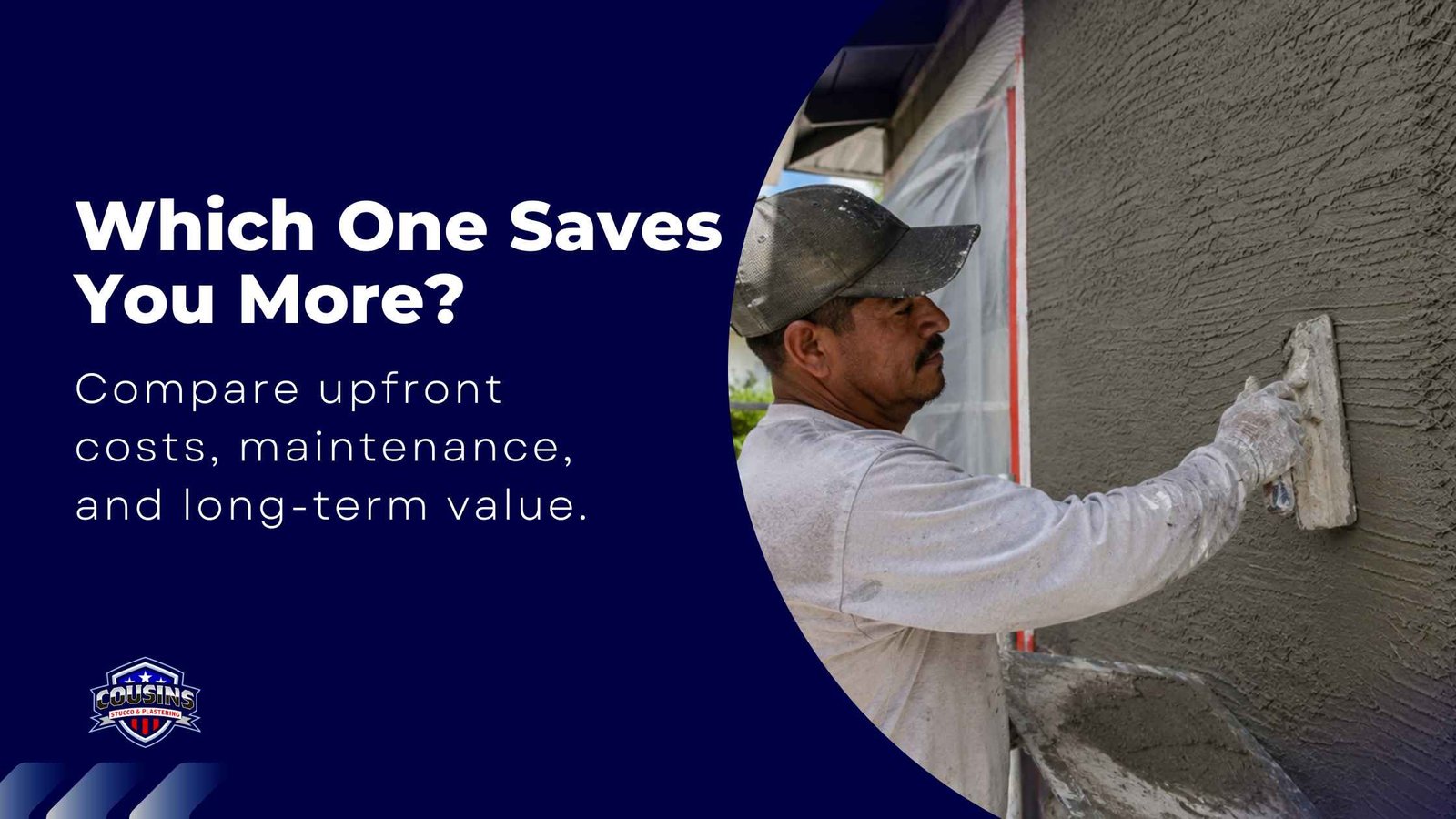
When you’re standing at the crossroads of a major exterior renovation, the question of cost is usually the first one out of your mouth. Stucco or siding — which one is going to stretch your budget further, hold up longer, and actually deliver value for your specific home? The honest answer is more nuanced than a simple yes or no, and if you go into this decision without understanding the full picture, you risk making a choice you’ll regret five or ten years down the road.
Let’s walk through what actually determines cost, what each material demands over time, and how to make a smart, informed decision for your home.
What Makes Exterior Material Costs So Hard to Compare
You can’t compare stucco and siding on a single number. The installed cost of any exterior finish depends on variables that shift dramatically from one home to the next — wall complexity, substrate condition, regional labor rates, the specific system being applied, and the finish type all play significant roles.
That’s why homeowners who call around for quotes often get wildly different numbers. They’re not always comparing the same scope of work. A contractor quoting a basic vinyl siding installation is working in an entirely different world than a plastering crew applying a full 3 coat stucco system over wire lath on a multi-story home.
The smartest approach is to understand the cost structure of each material — what drives it up, what drives it down, and what hidden expenses tend to surface after the job is done.
Breaking Down Stucco: The 3 Coat System Explained
Traditional stucco is a cement-based exterior finish applied in multiple layers directly over a substrate. The industry-standard method is the 3 coat stucco system, which consists of a scratch coat, a brown coat, and a finish coat. Each layer serves a specific structural purpose, and skipping or thinning any of them compromises the entire assembly.
Here’s what each coat does:
- Scratch coat — The first layer applied over wire lath. It’s raked (scratched) horizontally to create mechanical bonding for the next coat.
- Brown coat — Applied after the scratch coat has cured. This is the leveling layer that establishes plane and thickness.
- Finish coat — The decorative surface layer. This is where texture and color are introduced.
One critical fact that often gets misunderstood: traditional stucco is not waterproof, and it does not have a drainage plane. Moisture that penetrates the finish coat is managed by the weather-resistive barrier installed behind the stucco system, not by the stucco itself. This distinction matters enormously when evaluating long-term performance and maintenance expectations.
The labor intensity of a proper 3 coat application is significant. Skilled plasterers are required. Curing time between coats must be respected. There’s no shortcut that doesn’t come back to bite you. That labor investment is one of the primary cost drivers for stucco compared to most siding products.
Breaking Down Siding: Material Variety Changes Everything
“Siding” is not one product — it’s a broad category. The cost range between the cheapest vinyl siding and premium fiber cement or engineered wood siding is enormous. That’s the first thing you need to pin down before any cost comparison makes sense.
Here’s a general breakdown of common siding types by relative cost tier:
| Siding Type | Relative Upfront Cost | Durability | Maintenance Level |
|---|---|---|---|
| Vinyl Siding | Low | Moderate | Low |
| Fiber Cement (e.g., Hardie) | Moderate to High | High | Moderate |
| Engineered Wood | Moderate | Moderate to High | Moderate |
| Natural Wood | High | Variable | High |
| Metal (Steel/Aluminum) | Moderate to High | High | Low to Moderate |
Vinyl siding sits at the low end of upfront cost and is frequently chosen specifically because it’s economical. Installation is faster than stucco, requires less specialized labor, and the panels themselves are manufactured to standardized dimensions. That speed and simplicity translate to lower labor costs in most markets.
Fiber cement siding is a different story. It’s heavy, requires precise cutting, and should be installed by experienced crews familiar with the manufacturer’s specifications. Its durability credentials are strong, but it’s not the budget option.
The key takeaway: if you’re comparing traditional stucco against entry-level vinyl siding, siding will almost certainly win on upfront installed cost. If you’re comparing stucco against premium fiber cement or wood siding, the gap narrows considerably.
EIFS vs. Traditional Stucco: A Quick But Important Distinction
Before diving further, it’s worth separating two systems that often get lumped together under the word “stucco.”
Traditional stucco is a cement-based plaster applied in the 3 coat system described above. It does not have a drainage plane. It’s hard, dense, and breathable to a degree — but not waterproof.
EIFS (Exterior Insulation and Finish System) is a synthetic stucco system that incorporates rigid foam insulation beneath the finish layer. Unlike traditional stucco, EIFS has a vertical drainage plane built into the assembly to manage moisture that gets behind the finish layer. It’s lighter, provides insulation value, and creates a softer look — but it requires professional installation and the right drainage detailing to perform correctly.
These two systems have very different performance profiles, maintenance needs, and cost structures. When someone says “stucco is expensive,” they may be quoting EIFS. When someone says “stucco cracked,” they’re likely talking about traditional hard coat. Make sure you’re comparing the right thing before drawing conclusions.
Long-Term Cost: Where Stucco Often Wins
Upfront cost is only part of the story. The smarter question is: what does this exterior cost you over 20 or 30 years?
Stucco, when properly installed with a full 3 coat system, is one of the most durable exterior finishes available. In the right climate — particularly dry, warm environments like the American Southwest — traditional stucco can last for decades with minimal intervention. It doesn’t rot, it doesn’t warp, it doesn’t attract insects, and it doesn’t need to be painted on an aggressive cycle.
Vinyl siding holds up reasonably well but has real limitations. It can crack in extreme cold, fade in intense sun, and warp near heat sources. While it doesn’t rot like wood, hail and impact damage can leave panels looking battered. Over time, you may find yourself replacing sections.
Fiber cement is more competitive on longevity but requires periodic painting to maintain its protective finish. That maintenance cost adds up.
One ongoing cost consideration with stucco is crack repair. Stucco does crack — thermal movement, settlement, and impact can all cause cracks to develop over time. The good news is that cracks can be addressed effectively through a process involving crack chasing, followed by sealant application and stucco matching to blend the repair with the surrounding finish. Addressing cracks early prevents larger issues from developing, and professional stucco repair keeps the system performing as intended.
Ignoring small cracks — in any exterior cladding — is never a smart move. With stucco, the weather-resistive barrier behind the system does the heavy lifting when it comes to moisture protection, but only if the outer finish remains reasonably intact.
Finish Options and How They Affect Cost
Not all stucco finishes cost the same to apply, and the finish you choose significantly affects the overall look and maintenance profile of your exterior.
Smooth finish — Achieved by steel troweling the finish coat to a flat, refined surface. It’s a labor-intensive technique that requires skilled applicators and is one of the more premium finish options from a labor standpoint.
Float finish — Created by using a float tool over the finish coat to produce a fine or medium sand texture. It’s a popular middle-ground choice that balances aesthetics with application efficiency.
Dash and lace finishes — Heavier textures that hide imperfections well and apply more quickly, making them generally less expensive to install.
Color integration is another variable. Integral color — pigment mixed directly into the finish coat material — is compatible with both smooth and float finishes. The advantage of integral color is that it runs through the material, so minor surface wear doesn’t result in visible color loss the way painted finishes can. It’s a smart long-term investment when you’re going with a smooth or float finish.
Fiber mesh reinforcement, used to strengthen the stucco assembly over wire lath, adds material cost but contributes to crack resistance. It’s worth noting that fiber mesh is specifically used over wire lath applications — it’s part of the system design, not a universal add-on.
Climate and Regional Context: It Matters More Than You Think
Where you live shapes this decision as much as any other factor.
Stucco has been the dominant exterior finish in the American Southwest and Southeast for good reason. In dry, warm climates, traditional stucco performs exceptionally well over the long term. The absence of freeze-thaw cycles means less stress on the material. In humid coastal climates or regions with severe winters, the performance calculus changes.
Siding — particularly fiber cement — tends to handle climate extremes with a bit more flexibility. It’s why you see more fiber cement and vinyl in the Pacific Northwest, New England, and the upper Midwest.
This isn’t to say stucco can’t work in those climates. It can, when installed correctly with proper substrate preparation and a functional weather-resistive barrier. But the maintenance frequency may be slightly higher, and proper detailing at windows, doors, and penetrations becomes even more critical.
Your regional labor market also affects cost significantly. In markets where stucco is common, experienced plasterers are easier to find and labor costs are more competitive. In regions where stucco is less common, finding qualified installers can be harder, and the premium for specialty labor pushes costs up.
The Curb Appeal and Resale Value Equation
Cost isn’t just about what you spend — it’s also about what you get back. Both stucco and high-quality siding contribute meaningfully to curb appeal and resale value, but they appeal to different buyer profiles in different markets.
In the Southwest, a home with a well-maintained stucco exterior is expected and desirable. In markets where brick and lap siding dominate, premium fiber cement can be the stronger resale play.
Stucco does carry a perception of quality and permanence that cheaper siding materials don’t replicate. A properly executed smooth finish or refined float finish with integral color reads as a premium exterior. That perception matters when buyers are making decisions quickly during a walkthrough.
Making the Final Call: Which Actually Costs Less?
Here’s the honest summary:
- Stucco costs more upfront than basic vinyl siding in nearly every market. The labor intensity of a proper 3 coat system commands a skilled trade premium.
- Stucco competes more closely with premium fiber cement and engineered wood siding on upfront cost.
- Stucco often wins on lifecycle cost in the right climate, thanks to its longevity and minimal maintenance requirements outside of periodic crack repair.
- Your climate, your home’s architecture, and your budget timeline should drive the final decision more than any single cost comparison.
If you’re leaning toward stucco and want to understand what the process involves for your specific home — including repair scope if your existing stucco needs attention — the right next step is getting a professional evaluation.
Frequently Asked Questions
Is stucco more expensive to install than vinyl siding?
In most cases, yes. The labor involved in a properly applied 3 coat stucco system requires skilled plasterers and multiple cure cycles between coats. Vinyl siding installs faster with less specialized labor, which generally keeps its installed cost lower. However, the comparison shifts when you move from vinyl to premium siding options like fiber cement.
How long does stucco last compared to siding?
Traditional stucco, when installed correctly and maintained appropriately, can last several decades — often 50 years or more in favorable climates. Most vinyl siding carries a lifespan of 20 to 40 years depending on climate and maintenance. Fiber cement siding typically falls in the 30 to 50 year range with proper upkeep.
Does stucco require a lot of maintenance?
Stucco requires periodic inspection and crack repair, but it’s not a high-maintenance material in favorable climates. Addressing stucco cracks promptly through crack chasing, sealant, and stucco matching keeps small issues from becoming large ones. Outside of that, stucco doesn’t require the painting cycles that wood and fiber cement siding demand.
What is the difference between traditional stucco and EIFS?
Traditional stucco is a cement-based plaster applied in a 3 coat system over wire lath. It does not have a drainage plane, and moisture protection comes from the weather-resistive barrier behind it. EIFS is a synthetic system that incorporates rigid foam insulation and features a vertical drainage plane built into the assembly. They look similar but are fundamentally different systems.
Can stucco be applied over existing siding?
This depends heavily on the substrate, the condition of the existing siding, and the structural capacity of the wall assembly. In many cases, existing siding needs to be removed to properly install a 3 coat stucco system over wire lath. A professional evaluation is the only way to determine the right approach for your specific home. Contact a qualified stucco contractor to assess your project before making assumptions about what’s possible.