
Smooth stucco has a way of making a home look polished, intentional, and effortlessly elegant. If you’ve been eyeing those clean-lined Mediterranean-style homes across Southwest Florida and wondering how they get that seamless, modern exterior — the answer is almost always a smooth stucco finish done right.
Whether you’re building new, renovating, or simply tired of the outdated texture on your existing walls, understanding smooth stucco is the first step toward making a confident, informed decision. Let’s break it all down.
What Exactly Is Smooth Stucco?
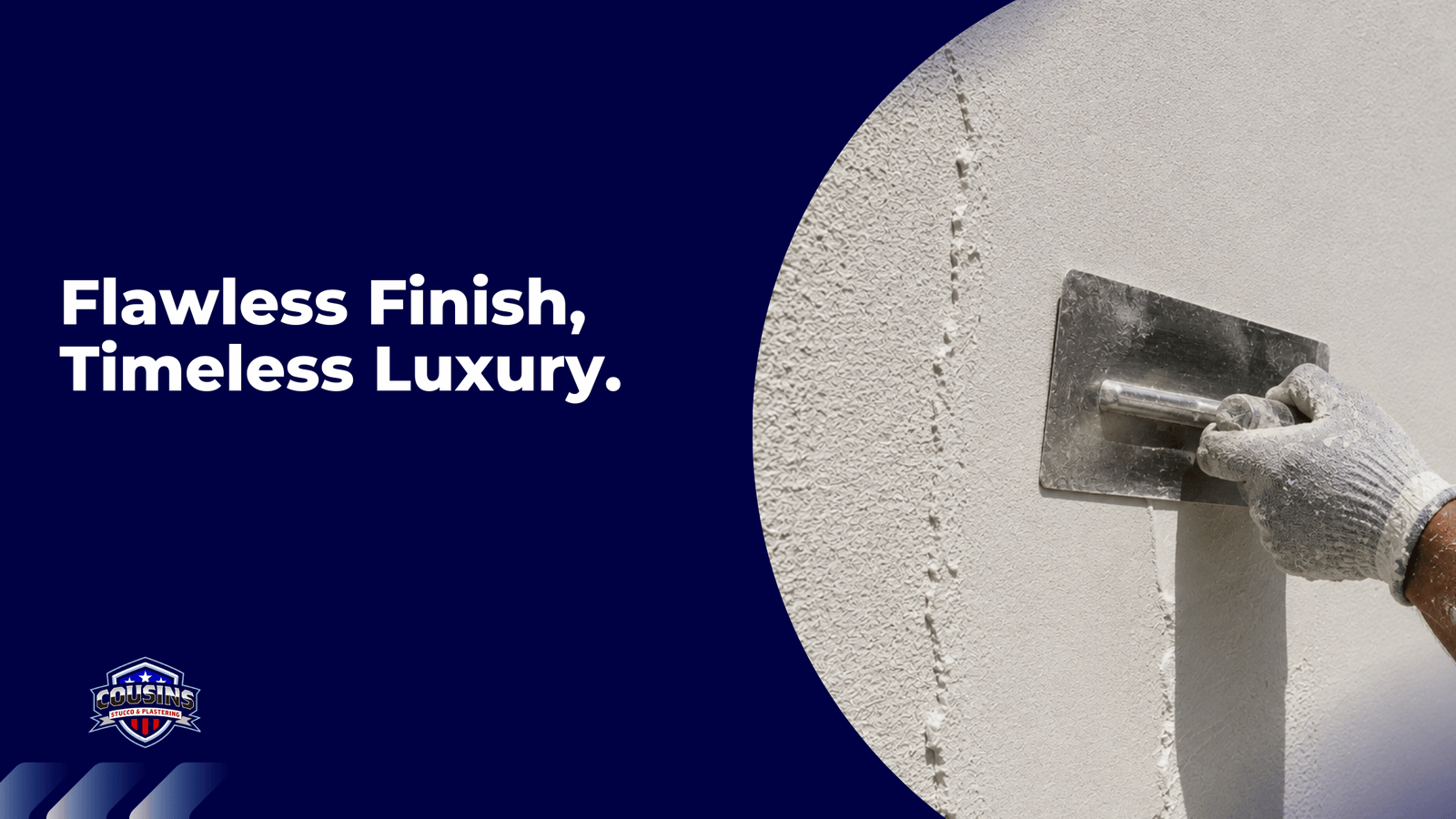
Smooth stucco is a plaster-based exterior (or interior) wall finish that’s applied and finished to create an even, flat surface with minimal texture. Unlike the popular Santa Barbara or dash finishes that leave a bumpy, rough appearance, smooth stucco is troweled carefully in multiple passes to eliminate peaks and valleys in the material.
It’s part of a broader family of stucco finishes that range from coarse and rustic to ultra-refined. The smooth variant tends to attract homeowners who prefer contemporary aesthetics, high-end curb appeal, or architectural styles that demand clean lines — think coastal modern, Mediterranean, or minimalist design.
The finish itself requires skilled craftsmanship. You can’t rush it. Any inconsistency in the base coat, any variation in moisture content, or any hasty trowel work shows up immediately on a smooth surface. That’s why choosing the right contractor matters more with this finish than almost any other.
How the Smooth Stucco Application Process Works
The application process for smooth stucco follows a structured sequence. Cutting corners at any stage will compromise the final appearance and the long-term durability of the wall system.
Here’s how it typically unfolds:
- Surface Preparation — The substrate (whether CMU block, wood frame with lath, or an existing stucco wall) gets cleaned, inspected, and primed where necessary. Any cracks, voids, or contamination must be addressed before a single layer of stucco goes on.
- Scratch Coat Application — A base coat of cementitious stucco is applied and scratched horizontally to create mechanical bonding ridges. This layer needs proper cure time — typically 48 hours or more depending on climate conditions.
- Brown Coat — A second coat is floated out to build thickness and begin leveling the wall plane. This layer is critical for achieving a flat surface. Skilled applicators use long straightedges and feathering techniques to eliminate high spots.
- Finish Coat — The final coat is where the magic happens. A smooth finish coat — often a polymer-modified or acrylic-based material — is applied in thin, even passes and then troweled repeatedly as it reaches the right moisture content. Multiple trowel passes compact and compress the surface, building that signature glassy, refined look.
- Curing and Sealing — Proper curing prevents shrinkage cracks. Depending on the system used, a sealant or elastomeric paint may be applied to protect and enhance the finish.
In Florida’s climate, humidity and heat play a significant role in each stage. An experienced local contractor knows how to adjust mix ratios, cure times, and application schedules to account for Southwest Florida’s unique weather patterns.
Smooth Stucco vs. Other Popular Finishes
Not sure if smooth is right for your project? Comparing it against other common finishes helps clarify the decision.
| Finish Type | Texture Level | Maintenance Needs | Best For | Cost Relative |
|---|---|---|---|---|
| Smooth Stucco | None / Minimal | Moderate (shows dirt) | Modern, Mediterranean | Higher |
| Float Finish | Light / Sandy | Low | Traditional, Coastal | Moderate |
| Dash Finish | Heavy / Rough | Low | Rustic, Budget-Friendly | Lower |
| Santa Barbara | Medium / Soft | Low to Moderate | Spanish Colonial | Moderate |
| EIFS Smooth | None / Flat | Low (sealed system) | Commercial, Modern | Higher |
Smooth stucco sits at the premium end of the spectrum — both in material cost and labor intensity. But the curb appeal payoff and the clean architectural statement it makes? It’s often worth every dollar for the right project.
Why Smooth Stucco Is Particularly Popular in Southwest Florida
Drive through Naples, Bonita Springs, or Cape Coral neighborhoods with newer custom builds and you’ll notice smooth stucco dominating the exterior palette. There are a few reasons it thrives here.
The architectural culture aligns with it. Southwest Florida leans hard into Mediterranean revival, coastal contemporary, and luxury residential styles. Smooth stucco complements all of them naturally.
It photographs beautifully. Whether you’re listing a property or simply want your home to stand out on the street, a crisp smooth stucco exterior photographs with a sophistication that rougher textures can’t replicate.
Local contractors here know how to work with it. Companies like Cousins Stucco, serving communities from Fort Myers to Punta Gorda and Port Charlotte, have refined their smooth finish technique specifically for Florida’s subtropical environment. The humidity, the intense sun, the salt air near the coast — all of these factors require localized expertise, not generic national-standard application.
Common Problems With Smooth Stucco (and How to Avoid Them)
Smooth stucco is unforgiving. Its beauty is also its vulnerability — because the surface is flat and refined, imperfections have nowhere to hide.
Hairline cracking is the most common complaint. It usually stems from either improper mix ratios, insufficient cure time between coats, or substrate movement. In Florida, thermal expansion and contraction from our dramatic temperature swings (especially in summer) can stress the wall system if it wasn’t designed to flex.
Efflorescence — that white powdery bloom on the surface — happens when water migrates through the stucco and deposits mineral salts on the face. It’s more visually obvious on smooth surfaces than textured ones because there’s no texture to break it up.
Delamination occurs when one coat fails to bond properly to the one beneath it. This is almost always a preparation or application error, not a materials failure.
Staining and dirt pickup is a reality with any smooth finish. The flat surface doesn’t shed water as aggressively as a textured finish, so grime and biological growth (algae, mildew) can accumulate faster — especially in humid coastal environments.
The good news: all of these problems are preventable when the job is done correctly from the start. And when issues arise on an existing home, professional stucco repair can address them surgically without tearing out the entire wall system.
Smooth Stucco Repair and Resurfacing: When Your Existing Finish Needs Help
Maybe you already have smooth stucco and it’s showing its age. Cracks radiating from window corners. Sections that look patchy or faded unevenly. Areas where a previous owner’s repair job was done with the wrong material and now sticks out like a sore thumb.
These situations don’t automatically require full demolition and replacement. In many cases, targeted stucco repair or a full resurfacing treatment can restore the appearance and integrity of the wall at a fraction of the cost.
Resurfacing involves applying a new finish coat over the existing stucco, after proper preparation and any necessary crack repair. When done by an experienced crew, the result looks indistinguishable from a new installation. The key is texture matching — if you’re only repairing a section, the new material needs to match the existing surface in both color and finish smoothness. This is a specialized skill, and Cousins Stucco’s team handles stucco texture matching across all of their Southwest Florida service communities.
Smooth Stucco for Commercial Properties
Smooth stucco isn’t just a residential play. Commercial properties across Southwest Florida — retail storefronts, office parks, multi-family complexes, hospitality buildings — use smooth stucco extensively to project a clean, professional image.
For commercial applications, EIFS (Exterior Insulation and Finish Systems) is often specified alongside or instead of traditional three-coat stucco. EIFS delivers a smooth finish with added insulation value, which matters significantly in Florida where cooling costs are a major operational expense.
Cousins Stucco handles commercial stucco and EIFS installation across their entire service area, including large-scale projects in Fort Myers Beach, Estero, and Lehigh Acres. Their commercial work carries the same attention to surface quality that their residential clients expect.
How to Choose the Right Smooth Stucco Contractor
This decision deserves serious attention. A bad stucco job — especially a smooth finish — is expensive to fix and hard to ignore every time you pull into your driveway.
Here’s what to look for:
- Local experience matters. A contractor familiar with Southwest Florida’s climate knows how to adjust their process for humidity, heat, and coastal salt exposure.
- Ask to see actual smooth finish work. Not just general stucco — specifically smooth. Drive by their completed jobs. Look at the light playing across the surface from multiple angles.
- Verify licensing and insurance. Florida requires licensed contractors for stucco work. Don’t skip this verification.
- Ask about their material specification. What product line? What thickness per coat? What’s the expected cure protocol?
- Get a written scope. Surface prep, number of coats, materials used, warranty terms — all of it should be documented.
The cheapest bid for smooth stucco is almost never the right choice. This is precision work. Paying for quality upfront saves you from a repair headache two or three years down the road.
Maintaining Your Smooth Stucco Finish Long-Term
Once you’ve invested in a quality smooth stucco installation, protecting that investment requires some routine attention.
Annual inspections — Walk the perimeter of your home once a year and look for hairline cracks, especially around window and door frames, corners, and where the stucco meets trim or other materials. Catching small cracks early prevents water intrusion and larger structural issues.
Soft washing — Smooth stucco benefits from periodic cleaning, typically annually or biannually in Florida’s humid environment. Pressure washing on high settings can damage the surface; soft washing with appropriate detergents is safer and more effective for removing algae and mildew.
Sealant refresh — If your smooth stucco was sealed or painted with elastomeric coating (which is common and recommended), that protective layer will eventually need refreshing — typically every 5 to 10 years depending on sun exposure and weather.
Don’t DIY repair mismatches — When cracks appear and need patching, resist the urge to grab a tube of caulk or off-the-shelf patch compound. Color and texture mismatches on smooth stucco are immediately noticeable. Call a professional who specializes in stucco texture matching and repair.
Frequently Asked Questions About Smooth Stucco
How long does smooth stucco last?
When properly installed and maintained, smooth stucco can last 50 years or more. The finish coat itself may need refreshing every 10 to 15 years, but the underlying wall system is highly durable.
Is smooth stucco harder to apply than textured stucco?
Yes, significantly. Because there’s no texture to mask inconsistencies, every trowel stroke is visible in the right lighting conditions. Smooth stucco demands more skilled labor, more passes, and more time than a rough or dash finish.
Can smooth stucco be applied over existing textured stucco?
In some cases, yes — but it depends on the condition of the existing surface. A professional needs to assess adhesion, stability, and thickness before recommending resurfacing over existing material.
Does smooth stucco crack more than textured stucco?
Not inherently. However, cracks are more visible on a smooth surface because there’s no texture to conceal them. Proper mix design, substrate preparation, and cure time management are essential for minimizing cracking.
What’s the difference between smooth stucco and EIFS?
Traditional smooth stucco is a cementitious system applied directly to the substrate. EIFS adds a layer of rigid insulation beneath the finish coat, improving energy efficiency. Both can achieve a smooth finish appearance, but EIFS is a more complex system with additional waterproofing components.
Conclusion
Smooth stucco is one of the most refined, architecturally impactful exterior finishes available — and in Southwest Florida, it’s become a hallmark of quality residential and commercial construction. But getting it right takes real expertise, locally informed technique, and the kind of craftsmanship that only comes with experience.
Whether you’re planning a new installation, dealing with a failing finish, or ready to upgrade your home’s exterior with a modern resurfacing project, the path forward starts with choosing the right team. Cousins Stucco has built their reputation across Naples, Bonita Springs, Fort Myers, Cape Coral, and the broader Southwest Florida region by delivering smooth finish results that hold up and look exceptional for the long haul.
Ready to transform your exterior with a flawless smooth stucco finish? Contact Cousins Stucco today to schedule your consultation — because your home deserves a finish as polished as the life you’ve built inside it.