
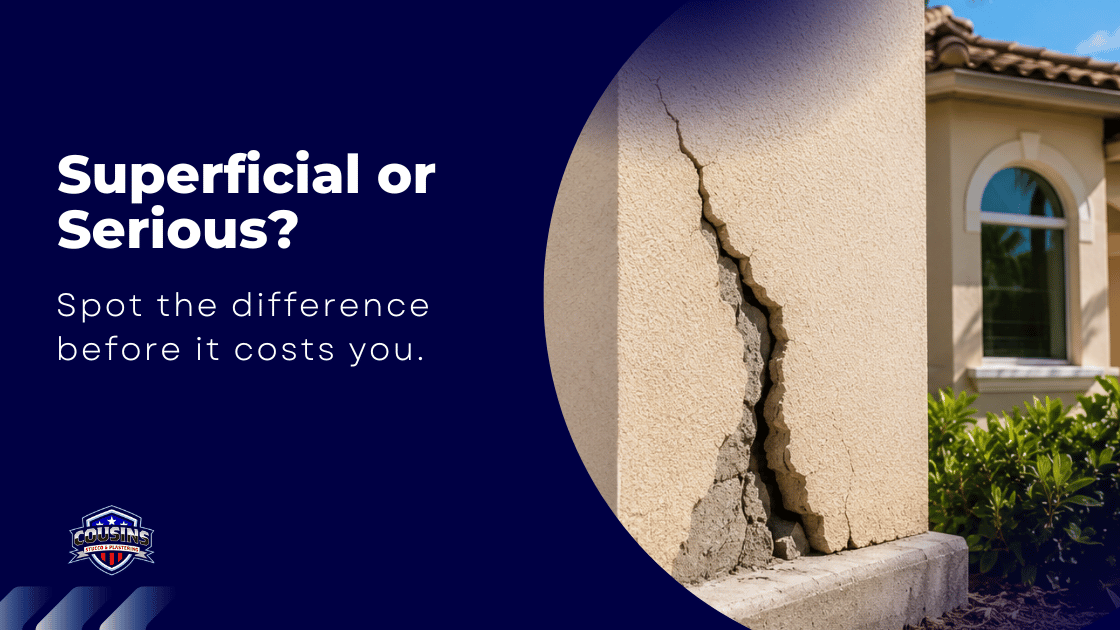
Stucco is a durable exterior finish commonly used throughout Southwest Florida, but over time it may develop cracks due to normal building movement, weather exposure, and the age of the stucco system.
If you’ve noticed cracks on your home’s exterior, you may wonder whether they’re simply cosmetic or a sign that the stucco should be evaluated. Understanding the difference between hairline cracks and larger, more significant cracks can help you determine when it’s time to contact a qualified stucco contractor.
What Are Hairline Stucco Cracks?
Hairline cracks are narrow surface cracks that commonly develop as stucco cures or as exterior walls experience normal thermal expansion and contraction.
These cracks are often cosmetic and may appear as fine lines across the finish coat.
Common Causes of Hairline Cracks
Hairline cracks may develop due to:
- Normal curing of the stucco system
- Daily temperature changes
- Minor building movement
- Natural aging of the exterior finish
Although hairline cracks are common, they should be monitored as part of routine exterior maintenance, particularly in Southwest Florida’s humid climate.
What Are Larger Stucco Cracks?
Larger or more noticeable cracks may indicate that additional movement or other conditions have affected the stucco system.
These cracks often require a professional evaluation to determine the appropriate repair approach.
You may notice:
- Cracks that become wider over time
- Cracks extending from windows or doors
- Multiple connected cracks
- Loose or hollow-sounding stucco
- Areas where the finish has begun to separate
The location, pattern, and condition of the crack are often more important than the width alone when evaluating the stucco system.
Why Do Stucco Cracks Develop?
Several factors can contribute to cracking throughout Southwest Florida.
Temperature Changes
Daily heating and cooling cycles cause building materials to expand and contract naturally, placing stress on the exterior finish over time.
Normal Building Movement
Buildings naturally experience movement due to seasonal conditions, soil characteristics, and material expansion and contraction. Because stucco is a rigid exterior finish, cracking may occur as part of this normal movement.
Moisture Exposure
Rain, humidity, and deteriorated sealants can allow moisture to reach areas of the wall assembly where it should not. Routine inspections help identify developing issues before repairs become more extensive.
The Importance of Control Joints
Control joints are incorporated into many stucco systems to help accommodate normal building movement.
When properly installed and maintained, they help reduce stress across large wall surfaces and contribute to the long-term performance of the stucco system.
Depending on the project, compatible vinyl control joints and other vinyl accessories may be incorporated into repairs or new installations.
Repairing Stucco Cracks
Not every crack requires the same repair method.
After evaluating the condition of the existing stucco system, repairs may include crack remediation, localized stucco restoration, texture matching, or rebuilding affected areas using a compatible 3 coat stucco system.
When appropriate, crack remediation involves mechanically opening the crack, installing a compatible sealant, and restoring the stucco finish to match the surrounding texture as closely as possible.
Traditional Stucco and EIFS
Traditional stucco and EIFS are different exterior wall systems and should not be confused.
Traditional stucco is a cement-based exterior finish. EIFS incorporates a vertical drainage plane that helps manage incidental moisture within the wall assembly when installed as part of an approved system.
Repair methods depend on the type of wall assembly and the condition of the existing exterior system.
When Should You Schedule an Inspection?
Consider having your stucco evaluated if you notice:
- Cracks that continue to widen
- Loose or hollow-sounding stucco
- Localized staining or signs of moisture
- Areas where the finish has separated from the wall
- Multiple cracks developing in the same area
An inspection helps determine whether the damage is primarily cosmetic or whether repairs are recommended.
Frequently Asked Questions
What is the difference between a hairline crack and a larger stucco crack?
Hairline cracks are typically fine surface cracks that develop from normal curing or thermal movement. Larger cracks or cracks that change over time may indicate conditions that should be evaluated by a qualified stucco contractor.
Are hairline cracks normal?
Yes. Hairline cracks are common in many stucco systems as buildings experience normal movement and the stucco ages. Monitoring these cracks as part of routine maintenance is recommended.
Can moisture enter through stucco cracks?
Depending on the size, location, and condition of the crack, moisture may reach areas of the wall assembly where it should not. Early evaluation can help determine whether repairs are needed.
Why are control joints important?
Control joints help accommodate normal building movement and reduce stress across larger stucco wall areas, helping minimize cracking over time.
How are stucco cracks repaired?
Repair methods depend on the condition of the existing stucco system. When appropriate, crack remediation includes mechanically opening the crack, installing a compatible sealant, and restoring the stucco finish to match the surrounding texture.
Do you install EIFS directly over concrete block?
No. EIFS is not installed directly over CMU block. Installation methods depend on the wall assembly and the specific requirements of the system.
Conclusion
Not every stucco crack indicates a serious problem, but understanding the difference between cosmetic cracking and more significant damage can help homeowners make informed decisions about maintenance and repairs.
If you’ve noticed cracks, loose stucco, or changes to your home’s exterior, Cousins Stucco can evaluate the condition of the existing stucco system and recommend an appropriate repair approach based on your property’s specific needs.