
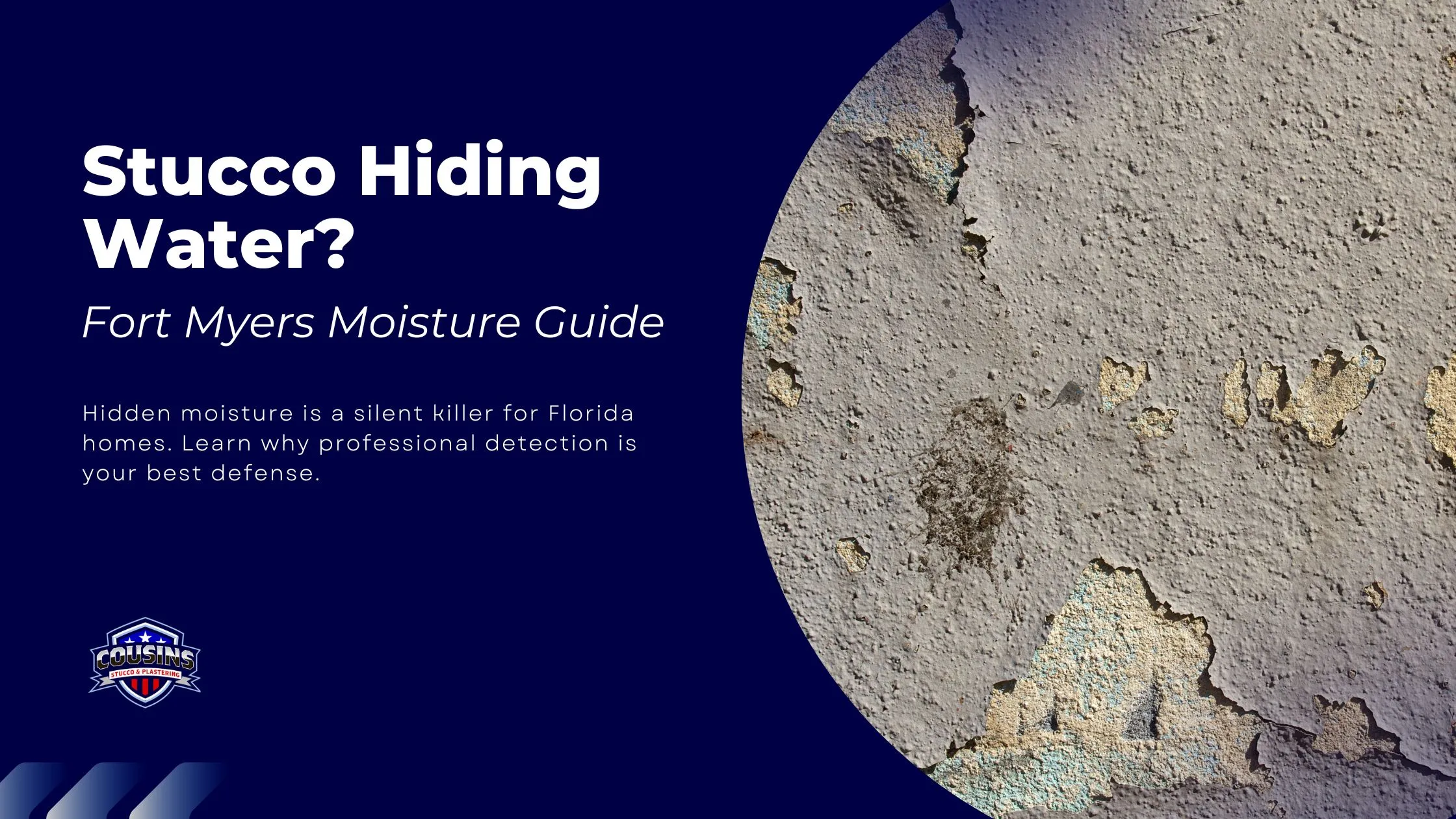
Stucco is a Southwest Florida staple for its durability and coastal aesthetic. However, in Fort Myers, our unique combination of high humidity, driving rain, and salt air creates a “pressure cooker” environment for building materials.
Many homeowners assume that if their walls look solid, they are performing well. Unfortunately, as local building experts, we know that stucco is porous. Reliable stucco moisture detection in Fort Myers is the only way to find water trapped behind the surface that quietly rots your structural framing. By the time you see visible staining or a musty smell indoors, the structural damage is likely already advanced.
Why Visual Inspections Fail in the Florida Climate
In drier states, stucco failure is obvious. In Florida, the environment works against you:
- The “Vapor Drive” Effect: High humidity prevents moisture from evaporating outward. Instead, it gets driven deeper into your wall cavity.
- Wind-Driven Rain: During hurricane season, tropical-force winds push water into microscopic gaps around windows and vents.
- The “Perfect Finish” Illusion: High-quality elastomeric paint can remain intact and look beautiful even while the wood sheathing behind it has turned to mush.
By the time you see bubbling paint, dark staining, or a “musty” smell indoors, the damage is likely advanced.
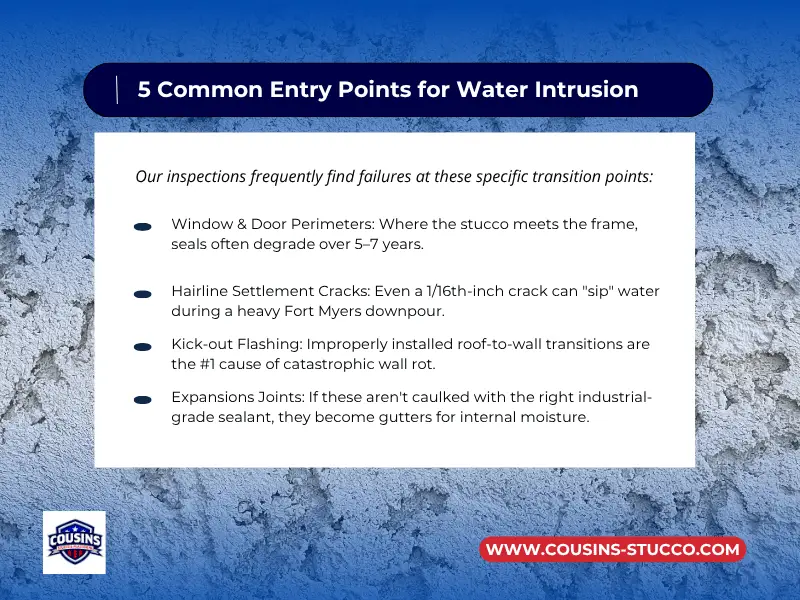
5 Common Entry Points for Water Intrusion
Our inspections frequently find failures at these specific transition points:
- Window & Door Perimeters: Where the stucco meets the frame, seals often degrade over 5–7 years.
- Hairline Settlement Cracks: Even a 1/16th-inch crack can “sip” water during a heavy Fort Myers downpour.
- Kick-out Flashing: Improperly installed roof-to-wall transitions are the #1 cause of catastrophic wall rot.
- Expansions Joints: If these aren’t caulked with the right industrial-grade sealant, they become gutters for internal moisture.
The 24-Hour Emergency Guide: What to Do If You Find Stucco Damage
If you discover a deep crack, a hole from a lawnmower stone, or storm damage, the next 24 hours are critical. Follow this emergency protocol to minimize structural rot:
1. The Immediate “Triage”
- Assess: Is there exposed mesh (lath) or gray/black wood visible? If yes, the barrier is fully breached.
- Shield: If rain is in the forecast, tape a piece of heavy-duty plastic sheeting over the area. Use blue painter’s tape or flashing tape (avoid duct tape, as it leaves a residue that ruins future repairs).
2. Clean and Stabilize
Use a soft brush to remove loose sand and crumbling stucco. Do not power wash the area, as this will force gallons of water directly into your wall.
3. Temporary Sealing
Apply a “stucco patch” compound available at local hardware stores.
- Pro Tip: Do not try to make it look pretty. Focus on a tight seal.
- Warning: Never seal a crack if the area inside is visibly soaking wet; you will trap the moisture and accelerate rot. Let it air dry for a few hours first.
4. Professional Verification
A DIY patch is a “band-aid.” You must have a professional verify that the water didn’t migrate horizontally behind the wall.
Frequently Asked Questions (FAQs)
How often should I test my stucco in Fort Myers?
We recommend a professional moisture scan every 3 to 5 years, or immediately following any named tropical storm or hurricane.
Does moisture testing damage my home’s value?
Quite the opposite. Having a “Dry Report” is a massive selling point in the Florida real estate market, providing buyers with peace of mind.
What is the average cost of stucco remediation?
Catching a leak early might cost $500–$1,500 to repair a seal. If the moisture is left to rot the studs, remediation can easily climb to $20,000–$50,000.
Protect Your Home Today
Don’t wait for the mold to reach your interior drywall. Contact our Fort Myers Stucco Specialists today for a comprehensive moisture evaluation.