
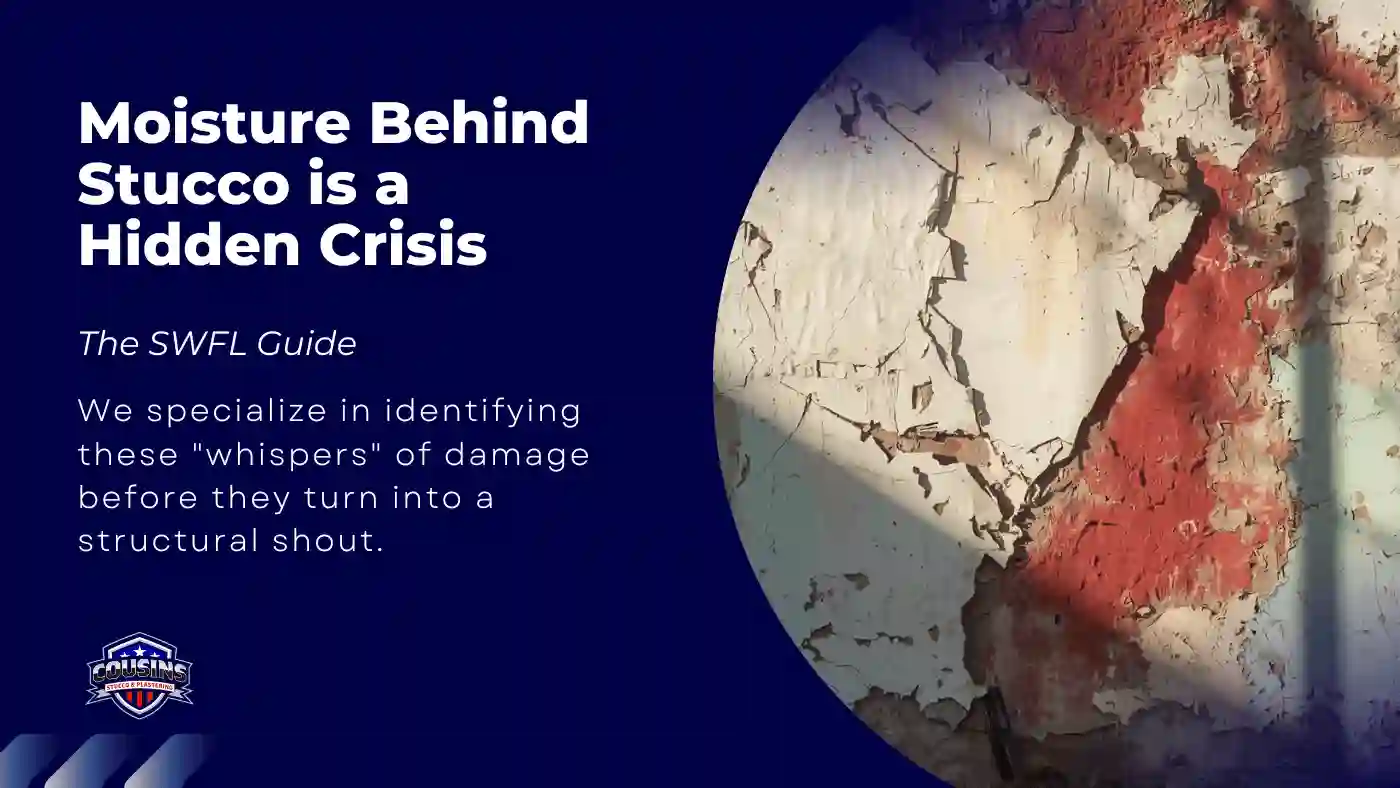
Southwest Florida is a paradise of sun and sand, but for a home’s exterior, it is one of the most hostile environments in the country. While stucco is prized for its classic coastal look, it can often act as a mask, hiding severe structural decay until it is too late. Understanding the specific indicators of stucco water damage is not just about maintenance; it is about protecting your home from the silent degradation that thrives in our tropical climate.
For many homeowners in areas like Naples, Cape Coral, and Fort Myers, the first sign of trouble isn’t a massive hole, but a subtle change in the wall’s appearance. At Cousins Stucco, we specialize in identifying these “whispers” of damage before they turn into a structural shout.
Why Moisture Behind Stucco is a Hidden Crisis
The building style in SWFL relies on a delicate balance. Stucco is a cement-based product that naturally absorbs some liquid, but it depends on a secondary drainage plane to keep the interior dry. When this system fails, you get moisture behind stucco that cannot evaporate due to our 90% humidity levels.
This trapped water creates a “dark, damp oven” behind your walls, which is the perfect breeding ground for mold and substrate rot. Because high-quality Florida paints are so good at holding their shape, your house can look perfectly fine on the outside while the structural framing behind the stucco degrades invisibly past the termination line.
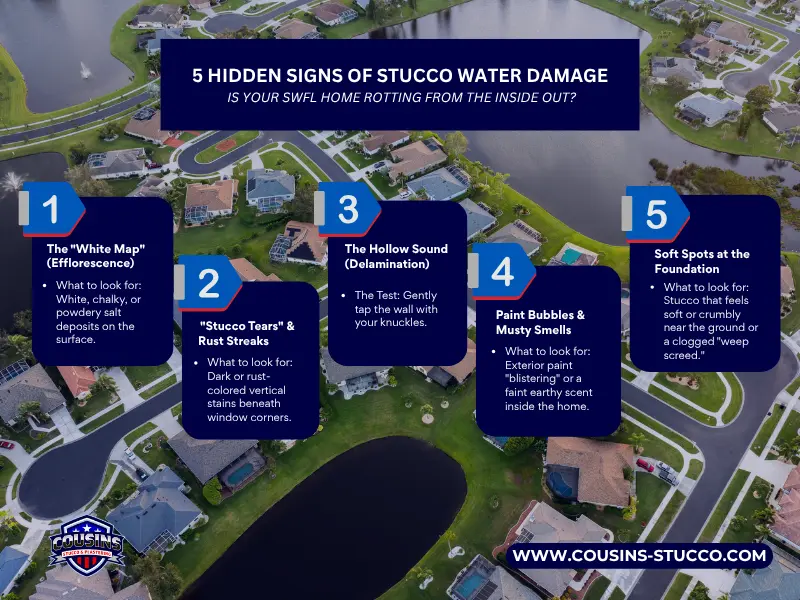
Crucial Stucco Leak Signs to Watch For
To protect your investment, you need to look beyond the surface. Here are the most common red flags that suggest your home’s exterior has been bridged.
1. Efflorescence (White Salt Deposits)
If you see a white, chalky substance blooming on your stucco, it is more than just an aesthetic annoyance. This is efflorescence, caused when water travels through the stucco and carries minerals to the surface. It is a definitive map of where water is moving through your wall.
2. “Tears” or Dark Streaking
Look closely at the bottom corners of your windows. Do you see dark, vertical streaks? Often called “stucco tears,” these marks indicate that the window flashing has failed and water is draining behind the stucco layer. If these streaks turn a dark, weathered brown, it means the underlying substrate layers are compromised.
3. The Tap Test: Listening for Delamination
A healthy stucco wall should feel like solid rock. If you suspect an area of stucco water damage, gently tap on it with your knuckles. A hollow, drum-like sound suggests that the stucco has “delaminated” or separated from the underlying structure. This gap is almost always filled with moisture or air that shouldn’t be there.
4. Bubbling and Interior Musty Odors
When water is trapped, it tries to push its way out. This often causes the exterior paint to bubble or lose its bond. Simultaneously, you might notice a faint, earthy smell inside your home near exterior walls. This “musty” scent is a primary indicator that mold is growing within the wall cavity.
5. Soft Spots Near the Foundation
Check the base of your walls. If the stucco feels soft because the casing bead at the bottom edge is blocked by dirt or heavy mulch, moisture is likely being wicked up into your walls through capillary action.
The Cost of Waiting vs. Proactive Repair
In Southwest Florida, water damage does not stay small. A localized leak can spread horizontally behind the walls, rotting out structural headers. At Cousins Stucco, we address these stucco leak signs with a transparent, linear-foot pricing model. Our repairs typically range from $15 to $30 per linear foot, allowing you to fix specific problem areas before they require a massive full-home remediation.
Professional Solutions for SWFL Homeowners
Fixing hidden damage requires more than just a bucket of patch compound. It requires an understanding of how Florida homes breathe. Our team focuses on restoring the moisture barrier, ensuring that all edges transition cleanly via proper termination lines, and verifying that your home can withstand the next major hurricane season without taking on water.
Frequently Asked Questions
Is all cracking a sign of stucco water damage?
Not necessarily. Small hairline cracks (the width of a hair) are common due to settling. However, any crack that is wide enough to fit a credit card is an open door for Florida rain. It should be inspected immediately to protect the structural sheathing.
Why do I see brown stains on my stucco?
Brown or orange staining is usually a sign of structural substrate distress. The lath matrix behind your stucco is holding water because it cannot drain properly. This is a serious sign that moisture is trapped behind the surface and requires an expert to review the system boundary transitions.
Can a pressure washer cause moisture behind stucco?
Yes. If used incorrectly, high-pressure water can be forced into small cracks or through the porous surface of the stucco, saturating the backing sheathing behind it.
Does homeowners insurance cover these repairs?
Most Florida policies cover water damage if it is “sudden and accidental” (like a storm). They rarely cover “gradual” damage caused by poor maintenance or old age, which is why early detection is so critical.
How long does a moisture inspection take?
A professional visual and tool-based inspection usually takes about 1 to 2 hours, depending on the size of the home. It is a small investment that can save you thousands in future repairs.
Is your home showing signs of a hidden moisture problem? Don’t let the Florida humidity win the battle for your home’s structural integrity. Contact Cousins Stucco today for a professional evaluation and a clear, honest quote. We use corrosion-proof vinyl accessories (trims, beads, and control joints) to help SWFL homeowners stop the rot and restore their peace of mind.