
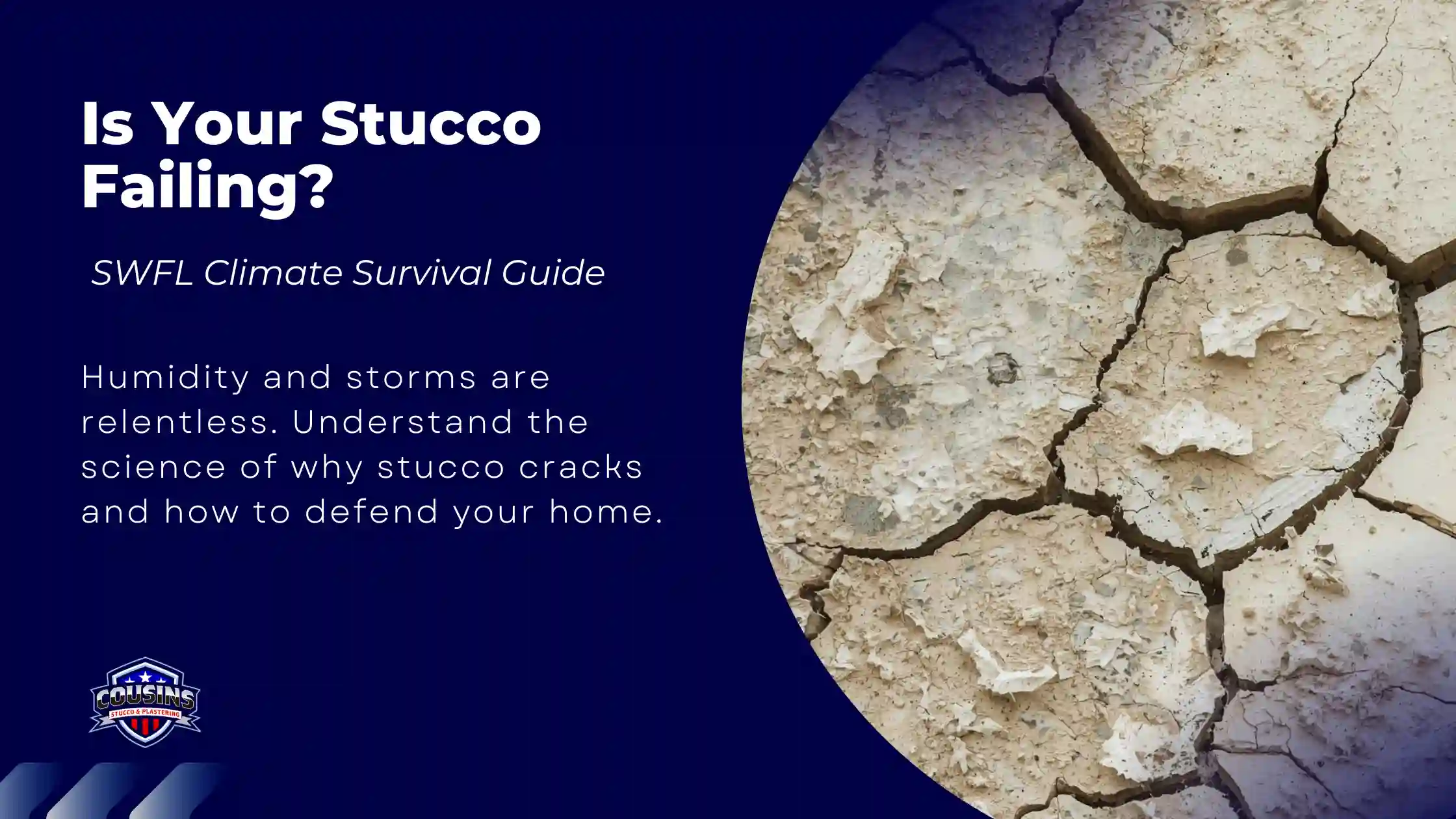
If you own a home in Southwest Florida, you know that the climate is as demanding as it is beautiful. While stucco is the region’s most popular exterior finish for its Mediterranean charm and fire resistance, it is constantly at war with the elements. Many homeowners find themselves asking why stucco fails after only a few years of coastal exposure. The reality is that the very things we love about the Sunshine State—the proximity to the Gulf, the tropical warmth, and the summer rains—are the primary drivers of stucco problems Florida residents face.
At Cousins Stucco, we believe that understanding these stucco damage causes is the first step in long-term property preservation. By identifying the stressors early, you can move from reactive repairs to proactive protection.
The Humidity Factor: A Leading Cause of Why Stucco Fails
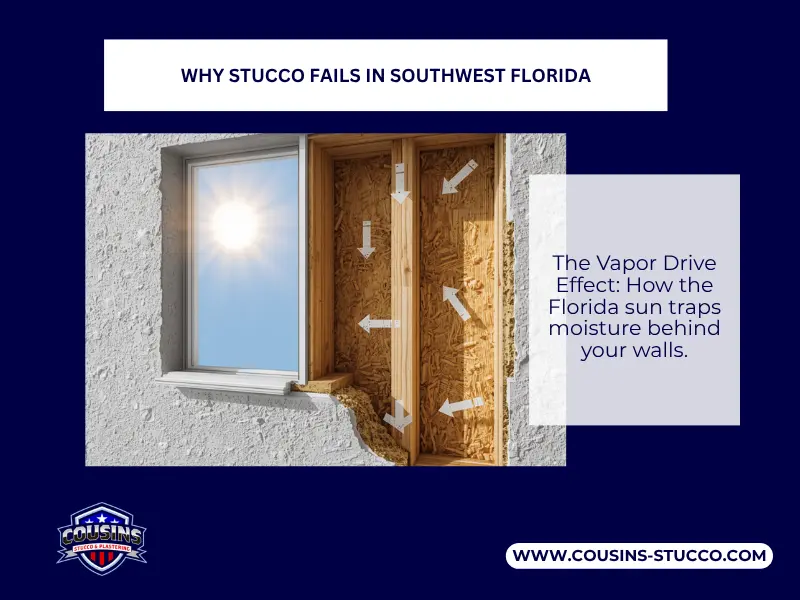
In Southwest Florida, humidity isn’t just a seasonal discomfort; it is a year-round reality. Stucco is a porous, cement-based material. This means it naturally “breathes,” but it can also absorb moisture from the heavy, damp air. When humidity levels remain high, the moisture trapped within the layers of the stucco can lead to delamination, where the finish begins to peel away from the structure.
This moisture trap is often worsened by “vapor drive,” where the heat from the sun pushes moisture deeper into the walls. Without a properly detailed casing bead or high-quality sealants, this leads to substrate degradation or the deterioration of the underlying lath matrix past the structural termination line.
Salt Air: The Invisible Catalyst for Stucco Problems
For those living in Naples, Fort Myers, or Sarasota, the salt air is a major contributor to stucco damage causes. Salt crystals are incredibly aggressive. As salt-laden mist settles into the hairline cracks of your home, the crystals grow and expand, acting like tiny wedges that force cracks to widen.
Furthermore, salt air accelerates the breakdown of unapproved components inside your walls. When substandard accessories fail, internal expansion creates immense pressure, leading to “spalling,” where large chunks of stucco simply pop off the wall. This is why Cousins Stucco utilizes premium, corrosion-proof vinyl accessories (trims, beads, and control joints) on every single application.
Tropical Storms, Hydrostatic Pressure, and Exterior Failures
We all know the intensity of a Florida afternoon downpour. When wind-driven rain hits your home, it creates hydrostatic pressure. If your stucco hasn’t been maintained with an elastomeric coating, that water is forced into the smallest fissures. Over time, these repeated cycles of wetting and drying cause the material to lose its structural bond, leading to the “stair-step” cracks commonly seen on Florida homes.
Poor Construction Practices: Root Reasons Why Stucco Fails
Sometimes, the answer to why stucco fails lies in the original application. During the construction booms in SWFL, some builders took shortcuts. This includes:
- Improper Mixing: Using too much sand or not enough water can result in a brittle finish.
- Missing Expansion Joints: Stucco needs room to expand and contract with the heat. Without proper vinyl control joints, it will crack under its own pressure.
- Thin Application: If the stucco is applied too thinly, it lacks the strength to withstand the Florida environment.
The Cousins Stucco Solution
Maintaining your home shouldn’t be a guessing game. At Cousins Stucco, we specialize in identifying these specific vulnerabilities before they become structural nightmares. We focus on high-quality remediation that addresses the root cause, ensuring your home remains a fortress against the Florida climate.
Frequently Asked Questions
What are the first signs of stucco problems in Florida?
Look for “spiderweb” cracks, lower substrate stains along the bottom edge, or a “hollow” sound when you tap on the wall. Bubbling paint is also a major red flag that moisture is trapped behind the surface.
Can I just paint over the cracks to stop the damage?
Standard house paint is rarely enough. To truly stop stucco damage causes from progressing, cracks must be bridged with specialized sealants or elastomeric coatings that move with the house and block water.
Why does my stucco have brown stains?
Brown or orange streaks usually indicate that non-compliant accessories behind your stucco are degrading from salt-air exposure. This is a sign of significant moisture intrusion that needs professional attention immediately to restore the proper termination line.
How often should I inspect my stucco?
Given the harsh SWFL climate, we recommend a professional visual inspection once a year, preferably before the start of the Atlantic hurricane season.
Is it normal for new homes to have stucco cracks?
Small hairline cracks can occur as a new home “settles,” but any crack large enough to fit a credit card into should be sealed professionally using an approved elastomeric strategy to prevent water from entering the building envelope.
Is your home showing signs of Southwest Florida weather wear? Don’t wait for the next big storm to find the weak spots in your exterior. Contact Cousins Stucco today for a comprehensive assessment. Our experts provide transparent, linear-foot pricing to ensure your home stays beautiful and bone-dry for years to come.